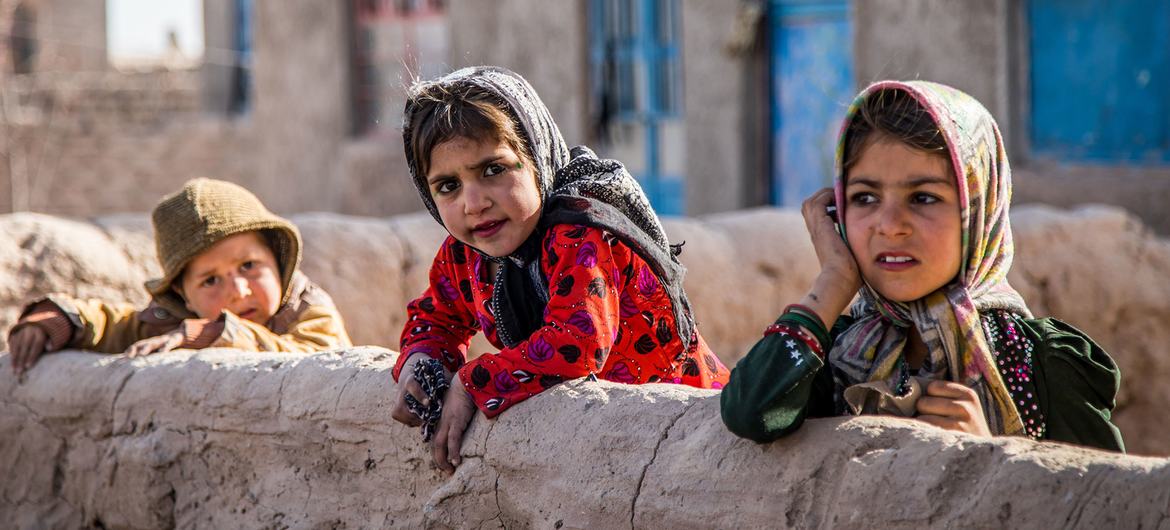

Findings from an economic and social assessment conducted by the United Nations Development Programme (UNDP) show that Afghanistan is simultaneously facing multiple crises, including mass return of migrants, drought, humanitarian pressure, and food insecurity.
The report states that nearly 3 million Afghans returned to the country last year, of whom 92% are facing food insecurity, only 3% are employed, 81% are in debt, and only 25% have access to education.
According to the assessment results, despite 1.9% economic growth last year, 28 million people—equivalent to 74% of the population—are facing food insecurity. Only 44% of the population has access to clean drinking water.
UNDP representative Stephen Rodríguez said:
“Just imagine for a moment that an entire generation of girls is quietly being deprived of education and opportunities. This report tells us that three out of every four Afghans, around 29% of the total population, are unable to meet basic needs such as food, water, energy, and shelter. The most surprising part is that these figures have changed compared to last year and are now beyond short-term challenges.”
Despite this, Afghanistan’s gross domestic product last year was $17.8 billion. The Afghan currency also strengthened against the US dollar compared to 2024, and the country recorded $14.9 billion worth of total exports and imports.
The findings show that foreign aid to Afghanistan has decreased by 16.5%, while demand for healthcare services has increased from 41% to 54%.
Rene Taus Hansen, head of economic development and livelihoods at the European Union in Afghanistan, also described the country’s economic and social situation as worrying.
He added:
“The economic and social situation in Afghanistan is concerning and has reached a critical level. There are warning signs that need to be addressed, and all stakeholders must find solutions. Nearly all participants pointed to shocks that Afghanistan is currently facing, including policy shocks implemented or neglected by the current authorities after coming to power.”
Meanwhile, Japan’s ambassador to Afghanistan, Kenichi Masamoto, described education as a fundamental factor in the overall development of any country and said depriving Afghan girls of education is a serious and irreversible loss.
At the same time, Masamoto reaffirmed continued support and assistance from international organizations and countries to Afghanistan in economic and humanitarian sectors. However, he said the latest UNDP findings show that Afghanistan continues to face deep economic and humanitarian challenges.
He stated:
“The situation of women and girls in Afghanistan requires special attention. The continuation of restrictions on girls’ education and social life is deeply concerning. There is no country in the world where restrictions are imposed on half of the population, limiting their potential. Education is the foundation of every nation.”
Meanwhile, the deputy representative of the UN Refugee Agency in Afghanistan said that the sudden return of six to seven million migrants has placed additional pressure on international aid efforts in Afghanistan, and despite efforts by both UN agencies and the Islamic Emirate, challenges remain.
UNDP is urging international organizations, countries, and the current Afghan authorities to continue efforts to resolve these issues and properly fulfill their responsibilities.