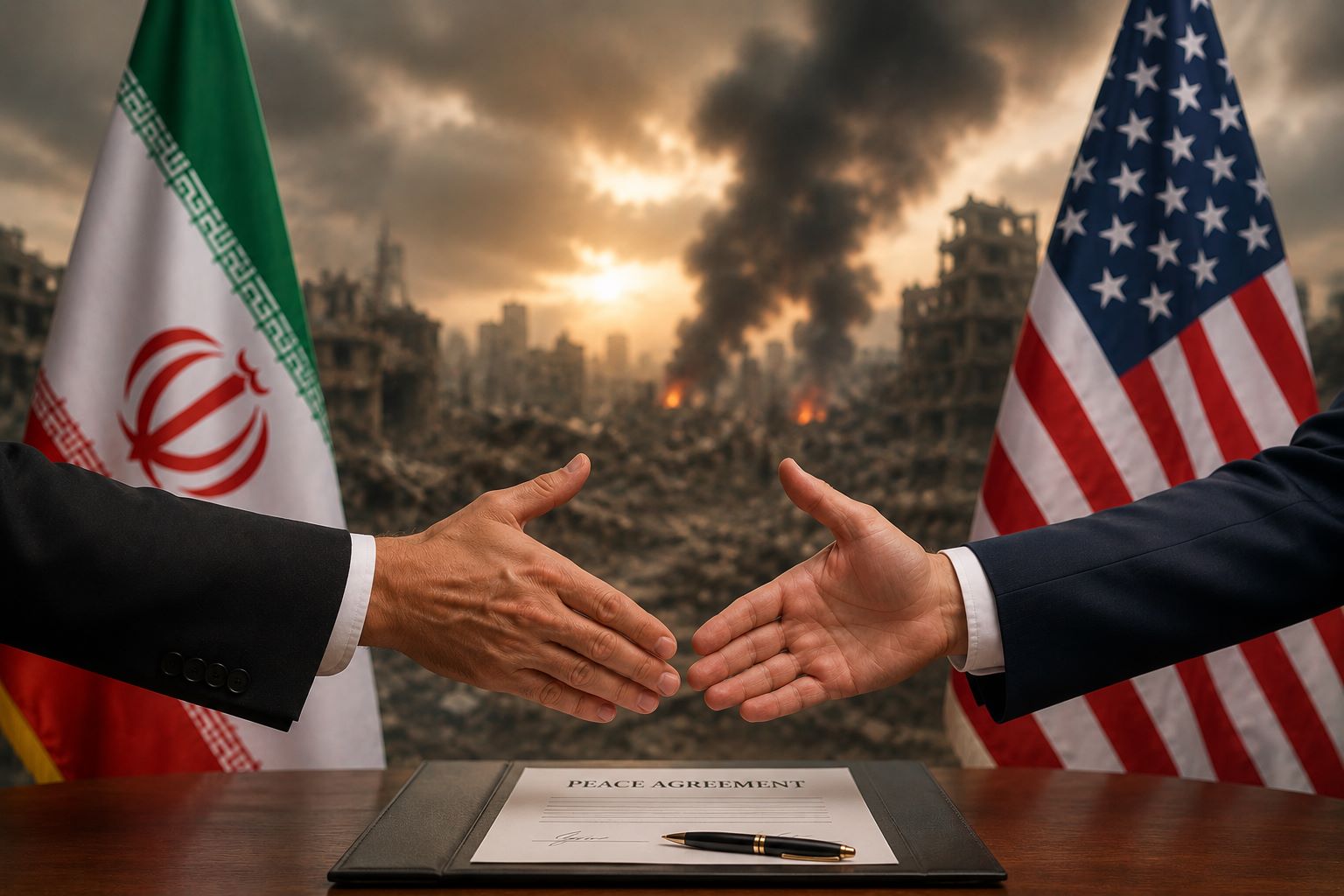

According to an announcement by U.S. President Donald Trump that negotiators have reached an agreement with Iran, U.S. Vice President J. D. Vance said the deal has the potential to transform the Middle East in a positive and fundamental way for the next 50 years.
Speaking to Fox News, Vance stated that the agreement could usher in a new era of prosperity and stability in a region that has experienced decades of tension and conflict.
He also claimed that President Trump had succeeded in eliminating what Washington viewed as a threat from Iran.
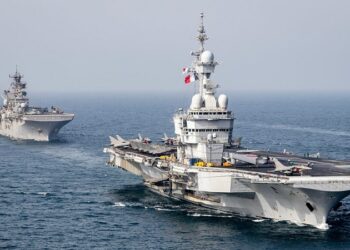
Trump, for his part, declared that the agreement had been finalized and congratulated all parties involved. He announced that the Strait of Hormuz would be fully reopened to international shipping and that the U.S. naval blockade against Iran would end.
Iranian officials likewise confirmed that the agreement had been finalized and said the formal signing ceremony would take place on Friday in Geneva.
Iran’s Deputy Foreign Minister Kazem Gharibabadi said that military operations on various fronts, including Lebanon, would come to an immediate and permanent end, while the U.S. maritime blockade against Iran would also be lifted.
Meanwhile, Pakistani Prime Minister Shehbaz Sharif confirmed that the two sides had reached an agreement and that it would be signed in Geneva on June 19.
António Guterres welcomed the accord, describing it as an important step toward a peaceful resolution of the conflict.
Several countries, including Japan, Australia, Qatar, United Kingdom, France, Germany, Italy, India, as well as the European Union and other international organizations, also welcomed the reported agreement, calling it an important development for regional and global stability.
Afghan analysts have described the end of tensions between Iran and the United States and the reopening of the Strait of Hormuz as positive news for Afghanistan, the region, and the wider world. They argue that reducing conflict could improve trade, lower economic pressures, and help prevent further humanitarian crises.
Reports also indicate that oil prices in Asian markets declined following news of the agreement and the expected reopening of the Strait of Hormuz, one of the world’s most important energy transit routes.
A barrel of crude oil reportedly fell by 3.8 percent to $84.02, while U.S. crude declined by 1.4 percent to $81.40.