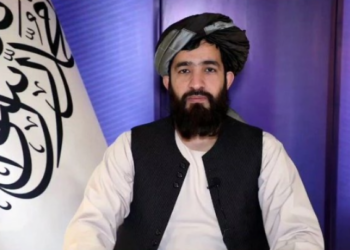
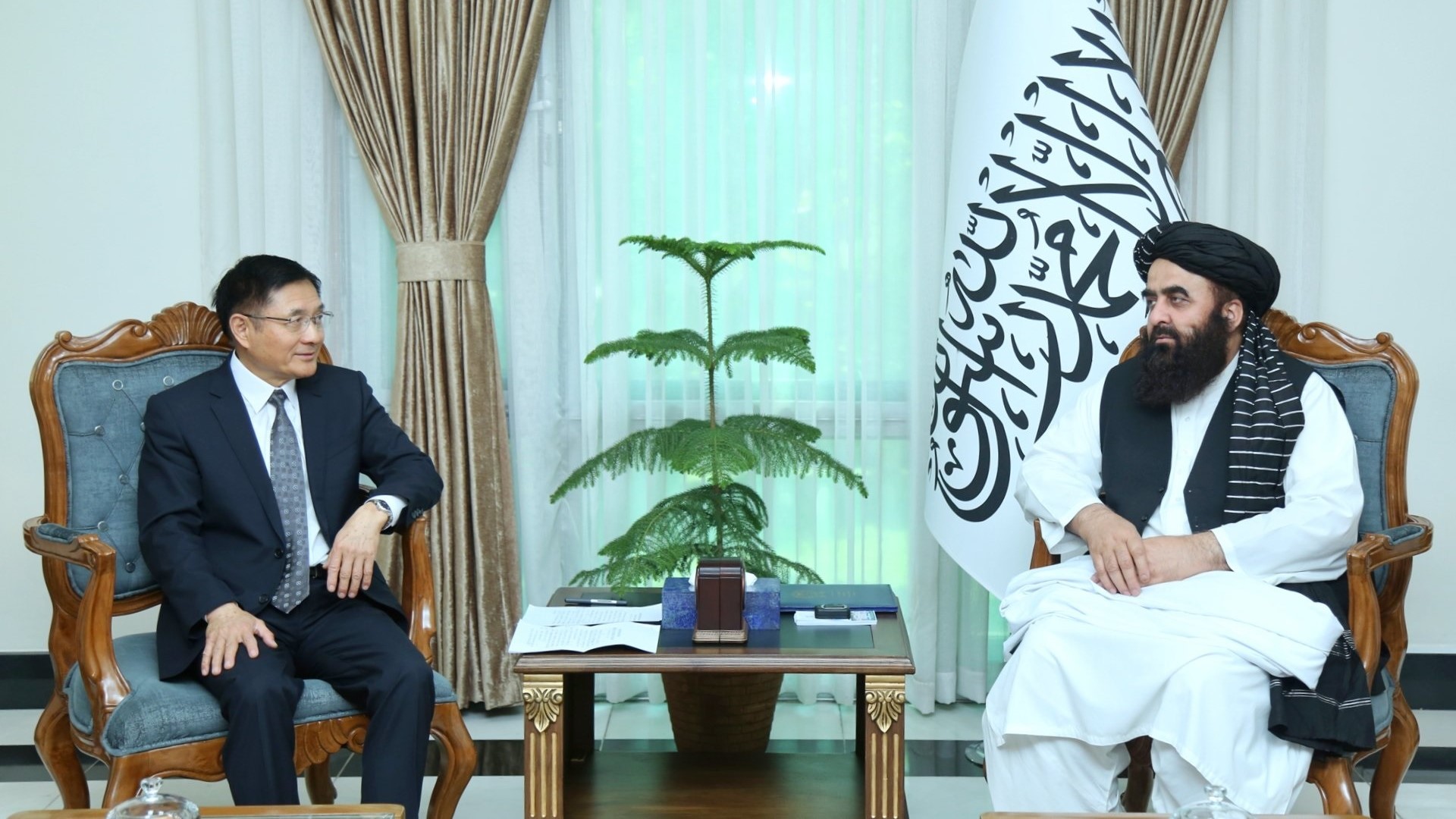

Afghanistan’s Foreign Minister, Mawlawi Amir Khan Muttaqi, has met with China’s Special Representative for Afghanistan, Yu Xiaoyong, in which both sides discussed strengthening bilateral relations, regional security, and the progress of the Afghanistan–Pakistan Urumqi dialogue process.
During the meeting, it was emphasized that the next round of talks between Afghanistan and Pakistan in Urumqi should be clear, practical, and results-oriented, based on a central agenda.
Muttaqi said that regional stability, balanced relations, economic cooperation, and ties based on mutual respect are the core pillars of Afghanistan’s foreign policy.
According to Deputy Foreign Ministry spokesperson Zia Ahmad Takal, the Foreign Minister stated: “Regional stability, balance, economic cooperation, and relations based on mutual respect are the fundamental pillars of Afghanistan’s foreign policy.
He stressed that the success of the dialogue process depends on real actions, strengthening an atmosphere of trust, and reducing tensions, and the Islamic Emirate has taken significant steps in these areas.”
He further added that the success of negotiations is linked to practical measures, confidence-building, and lowering tensions.
The Chinese special envoy also emphasized the continuation and effectiveness of the Urumqi dialogue, calling it an important framework for regional stability and coordination.
Zia Ahmad Takal added: “The Chinese special envoy stressed the continuation and effectiveness of the Urumqi process, describing it as an important framework for regional stability and coordination. He stated that the next phase must be focused on delivering practical outcomes and highlighted the importance of serious engagement, trust-building, and mutual understanding.”
Meanwhile, Pakistan’s Foreign Ministry on Monday summoned Afghanistan’s ambassador in Islamabad and handed over a protest note regarding a vehicle-borne suicide attack on a police post in Bannu.
The Islamic Emirate has strongly rejected any involvement in the attack.
Islamic Emirate spokesperson Zabihullah Mujahid said: “The Islamic Emirate rejects the recent claims by Pakistani officials that the attack on the police headquarters in Bannu was planned in Afghanistan. The Islamic Emirate believes that solving problems is only possible through dialogue, mutual respect, and real cooperation rather than accusations, threats, or emotional statements. The Islamic Emirate once again clarifies that Afghan territory is not used against any country, nor will anyone be allowed to carry out activities that harm regional security and stability.”
Analysts say China plays an important role in normalizing Kabul–Islamabad relations and stress that Pakistan should shift its policies toward Afghanistan in a positive direction instead of using force.
Political analyst Roohullah Hotak said: “Pakistan must reform its policies and cooperate for its own economic stability and regional peace. Otherwise, major problems may arise that could also threaten the interests of the region, especially China.”
Previously, several rounds of talks between Kabul and Islamabad were held in Saudi Arabia, Turkey, Qatar, and China, but the Islamic Emirate says they failed due to Pakistan’s insistence on unrealistic demands.