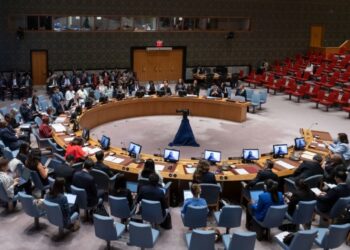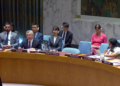
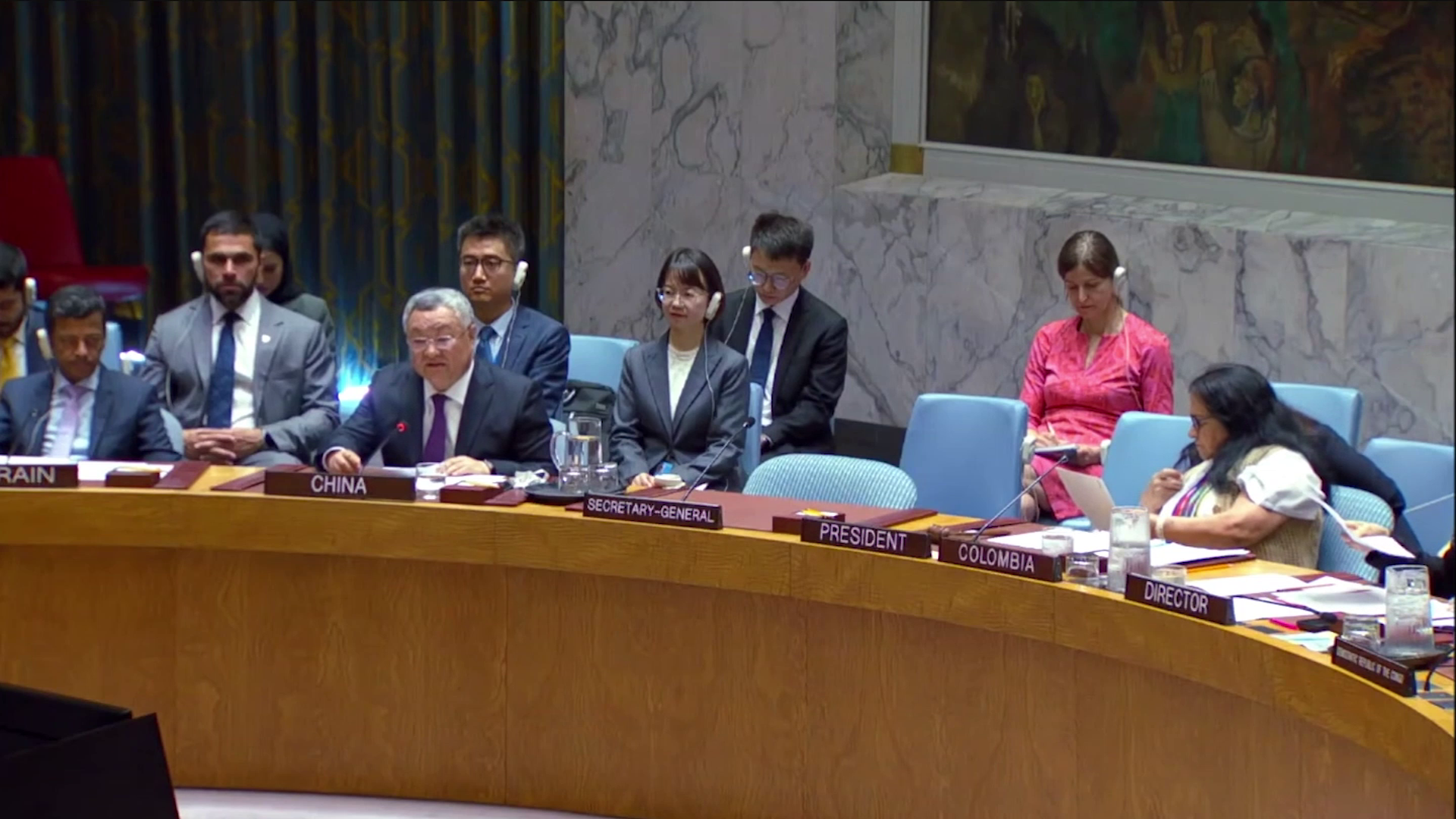

During the UN Security Council meeting held the previous night on the extension of the mandate of the United Nations Assistance Mission in Afghanistan (UNAMA), representatives of China and Russia emphasized the importance of Afghanistan’s integration into the international community.
Russia’s Deputy Permanent Representative to the UN, Anna Evstigneeva, said that lasting peace in Afghanistan would be impossible without practical measures that facilitate the country’s reintegration into the international system. She stressed that such an approach should be based on realistic assessments of Afghanistan’s current authorities and sustained dialogue with them.
“We believe that sustainable peace in Afghanistan is impossible without practical mechanisms that pave the way for the country’s reintegration into the international community. This process should be based on realistic assessments of the current authorities and patient, continuous engagement with them. There is no alternative to this approach,” she said.
China’s representative, Fu Cong, described the Security Council resolution extending UNAMA’s mandate as a reflection of the international community’s expectations regarding Afghanistan’s integration. He expressed hope that UNAMA would serve as a bridge between Afghanistan and the international community, facilitating dialogue and cooperation.
Fu Cong also urged Afghanistan’s current authorities to establish an inclusive government, fulfill international obligations, and take steps toward becoming a fully integrated member of the international community.
“This resolution reflects the international community’s expectations for Afghanistan’s integration. UNAMA should play a bridging role between the Afghan government and the international community and facilitate dialogue. Afghanistan should be encouraged to form an inclusive government, adopt new policies, fulfill its international commitments, and join the international community at the appropriate time,” he stated.
In contrast, the United States representative argued that the success of any political process in Afghanistan depends on concrete actions by the current authorities. Washington called on the Islamic Emirate to honor its counterterrorism commitments, fulfill international obligations, and ease restrictions on human rights, particularly those affecting women and girls.
Jennifer Luseta, the U.S. representative for political affairs at the UN, said: “For this political process to succeed, the Taliban must take practical steps. They must uphold their counterterrorism commitments, respect Afghanistan’s international obligations, end the practice of hostage-taking, and stop violations of human rights, especially against women and girls. They should also remove restrictions that harm Afghans and hinder UNAMA’s work.”
The calls by China and Russia for Afghanistan’s integration come despite the fact that, apart from Russia, no country has formally recognized the Islamic Emirate, and Afghanistan’s current authorities continue to be excluded from many international forums.
The Islamic Emirate maintains that it has met all conditions repeatedly
raised by the international community for engagement and recognition, but
argues that foreign governments continue to pursue what it describes as
inconsistent and selective policies toward Afghanistan.