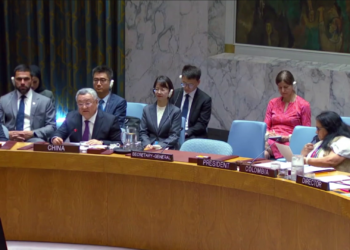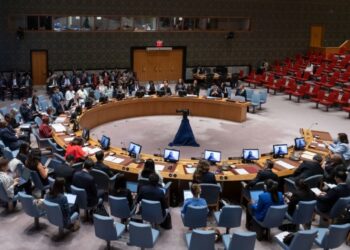

The United Nations Human Rights Council, in its latest report, has once again expressed concern over human rights violations in Afghanistan and the decline in international assistance to people in need.
The report, citing the UN High Commissioner for Human Rights, states that since the return to power of the Islamic Emirate, restrictions on women and girls have expanded, with numerous decrees issued and laws enacted to enforce these limitations.
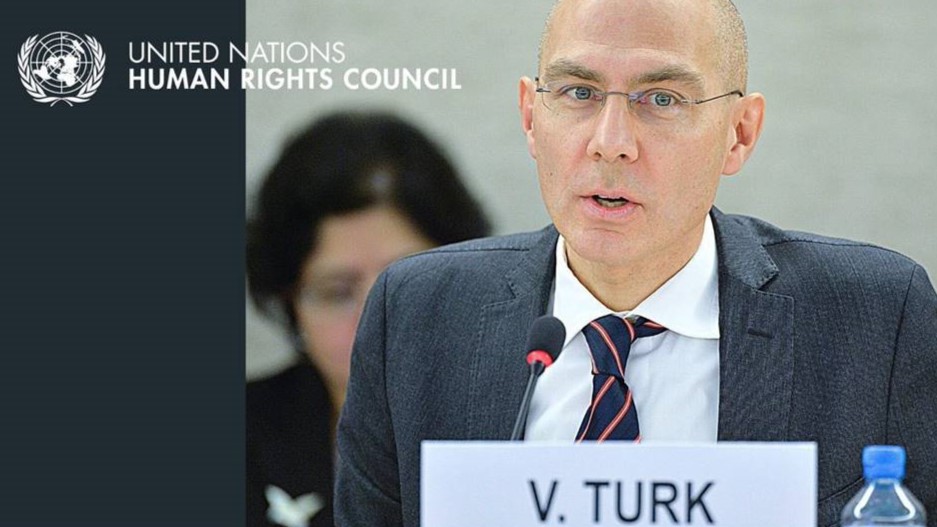
Volker Türk, referring to bans on women working within UN-related institutions in Afghanistan, said that restrictions on women’s employment in government institutions and on girls’ education have increased.
Volker Türk added:
“Women and girls are the future of a country, and without them, progress is not possible. Millions of Afghans are facing multidimensional poverty. Access to education, work, adequate food, clean water, and medicine remains limited.”
The report assessing Afghanistan’s human rights situation claims that nearly 22 million Afghans still require humanitarian assistance this year.
It further notes that an unprecedented reduction in international humanitarian aid, the expulsion of around three million Afghan migrants from Iran and Pakistan, the adverse effects of climate change, and the displacement of thousands due to clashes along the disputed border with Pakistan have all worsened the humanitarian situation.
The report states:
“Approximately 21.9 million people—nearly 45 percent of the population—are in need of humanitarian assistance this year. This crisis has been exacerbated by reduced international aid, the return of three million Afghan migrants from neighboring countries, and the continuation of drought conditions.”
The UN Human Rights Council has called on the Islamic Emirate to lift restrictions on women’s work and education.
The Islamic Emirate has not yet responded to this latest report, but it has previously rejected similar claims by the UN and other international human rights organizations as baseless.
The government has consistently maintained that it has granted rights to all Afghans in accordance with Islamic principles.
Meanwhile, analysts believe that Afghans urgently need comprehensive progress in education and economic sectors, noting that the country has endured decades of conflict and hardship, leaving people deprived of basic necessities.
Political analyst Akhtar Mohammad Rasikh said:
“Afghanistan has gone through half a century of conflict and is currently facing severe economic challenges. If international mediation takes place, the conflict with Pakistan is stopped, and employment opportunities are created for Afghans, I believe the country can overcome this economic crisis.”
This UN Human Rights Council report on Afghanistan covers the period from August 2025 to January 2026, focusing on human rights and humanitarian issues.
The report comes at a time when other UN agencies working on Afghanistan have also raised serious concerns over budget shortages affecting their humanitarian operations and have called on the international community to increase emergency assistance for Afghans in need.