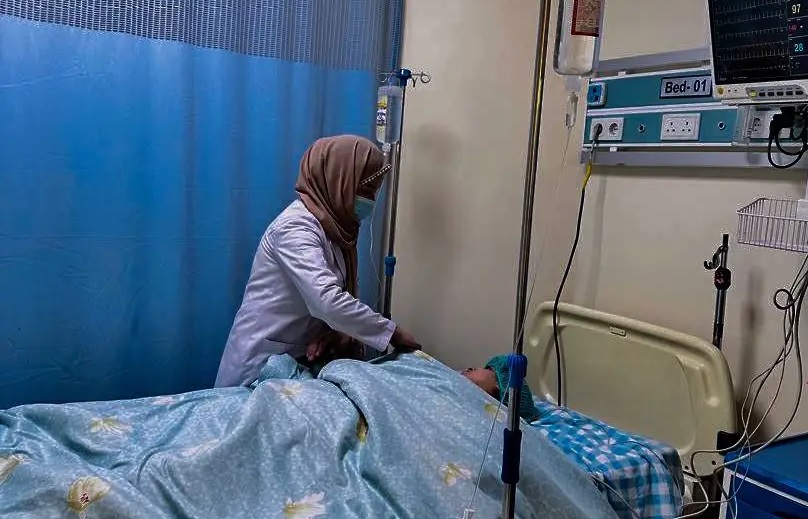

The World Health Organization (WHO) says that, with the support of the Islamic Development Bank, it is working to further strengthen healthcare services for mothers and children in Afghanistan.
In its latest report, the organization described Afghanistan as still being one of the deadliest countries for mothers, stating that one woman continues to die every hour during childbirth in the country.
WHO emphasized that mothers who often face dangerous conditions during childbirth must be provided with all necessary healthcare facilities and support.
The report stated:
“With the generous support of the Islamic Development Bank, we aim to provide essential healthcare services for mothers and children across Afghanistan. The main goal is to ensure safe childbirth for mothers. At the same time, we are trying to provide necessary services to women who face complications during delivery.”
The World Health Organization also stated that, out of every 100,000 live births, many mothers lose their lives due to various causes, especially high blood pressure and complicated deliveries.
According to the report, women who survive such conditions often continue to face serious health consequences afterward.
WHO further said:
“In Afghanistan, 521 mothers die for every 100,000 live births due to preventable complications. For example, high blood pressure, infections, and difficult childbirth are among the causes of maternal deaths.”
Attempts were made to obtain comments from Afghanistan’s Ministry of Public Health regarding the report, but the ministry did not share its response.
Some gynecology and obstetrics doctors, referring to the high maternal mortality rate in the country, said that awareness programs for pregnant women during the early months of pregnancy are necessary to prevent deaths during childbirth.
They also described the shortage of standard hospitals and insufficient care during pregnancy as major causes of maternal mortality.
Gynecologist Dr. Kokab Nawab said:
“To prevent maternal deaths, especially in provinces, counseling and guidance centers for pregnant women should be established. Public awareness programs should also be created for men. In addition, healthcare centers and clinics must be expanded in remote and mountainous areas so the mortality rate can be reduced.”
Beyond this, child health is also an issue raising serious concerns.
The Nutrition Department of the Ministry of Public Health says malnutrition among children is increasing and notes that malnutrition often leads to child deaths.
According to officials, special programs have been planned for the treatment of malnourished children.
A Ministry of Public Health nutrition official, Zabihullah, said:
“In emergency situations, our services focus specifically on malnourished children, and all children under the age of five are covered under this program. We also have counseling departments in all clinics. We urge all mothers to visit every month during pregnancy and seek medical consultation.”
This WHO report comes at a time when, according to a UNICEF report, Afghanistan could lose a large number of female doctors by 2030.