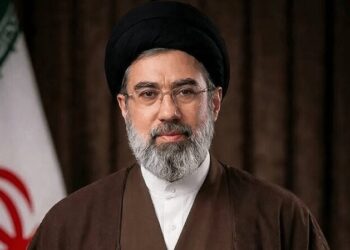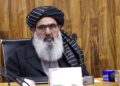

The leader of Jamiat Ulema-e-Islam, Maulana Fazlur Rehman, said during a press conference in Lahore that Pakistan’s current situation is facing complicated domestic, regional, and international challenges.
Fazlur Rehman said tensions with Afghanistan and India, strained relations with Iran, and significant changes in ties with China are among the main causes of these challenges.
He added that, in addition to these problems, Pakistan’s relations with neighboring and regional countries have become unbalanced and called for a review of the country’s political policies.
Fazlur Rehman said:
“Pakistan is currently facing complex challenges. In the east, there is a state of conflict with India; in the west, fighting is ongoing along the entire Durand Line with Afghanistan. China, based on its concerns, is no longer maintaining strong relations with Pakistan, and Iran is preoccupied with its own problems. Given such a situation, a new policy must be developed.”
Alongside confrontations with neighboring countries, Pakistan is also said to be facing internal insecurity, political divisions, and a fragile economic situation.
Analysts believe the ongoing crises and economic difficulties in the country are the result of policies by the ruling military establishment, which they say have defined national interests and foreign relations based on personal interests.
Political analyst Idris Mohammadi Zazai said:
“There is a specific circle within Pakistan’s military leadership whose wrong policies have now put the Pakistani people in hardship. One of the main problems is the economy. Ordinary people are suffering greatly in this regard. Another issue is political instability. Some officials are exploiting the people, while ordinary citizens have little ability to raise their voices.”
Some Pakistani media outlets have reported that following the attacks by the United States and Israel on Iran, Gulf countries have withdrawn short-term loans previously provided to Pakistan, which had supported both its military and civilian sectors.
Reports also say Pakistan, in addition to seeking billions of dollars in conditional loans from the International Monetary Fund, has recently requested a $500 million loan from the Asian Development Bank.
Economic analyst Abdul Nasir Reshtia said:
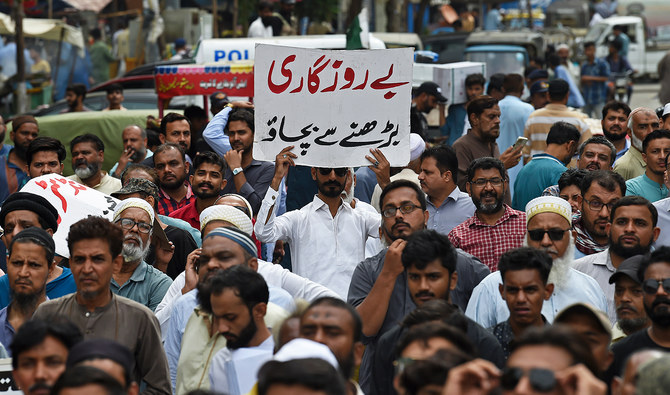
“Political and security instability in Pakistan has discouraged investment. Unfortunately, for a long time not only has there been no new investment in Pakistan, but investors are also leaving the country. Insecurity and administrative corruption are the main reasons for the weakening and potential collapse of Pakistan’s economy. Poor relations with neighboring countries are another factor. Afghanistan has stopped its trade with Pakistan, even though it used to be the fifth-largest market for Pakistani goods.”
According to reports, Pakistan’s military-led government has imposed spending restrictions on the public following rising prices of oil and other essential food items. This has not only affected the daily lives of ordinary citizens but has also harmed the revenues and business activities of traders and the private sector.