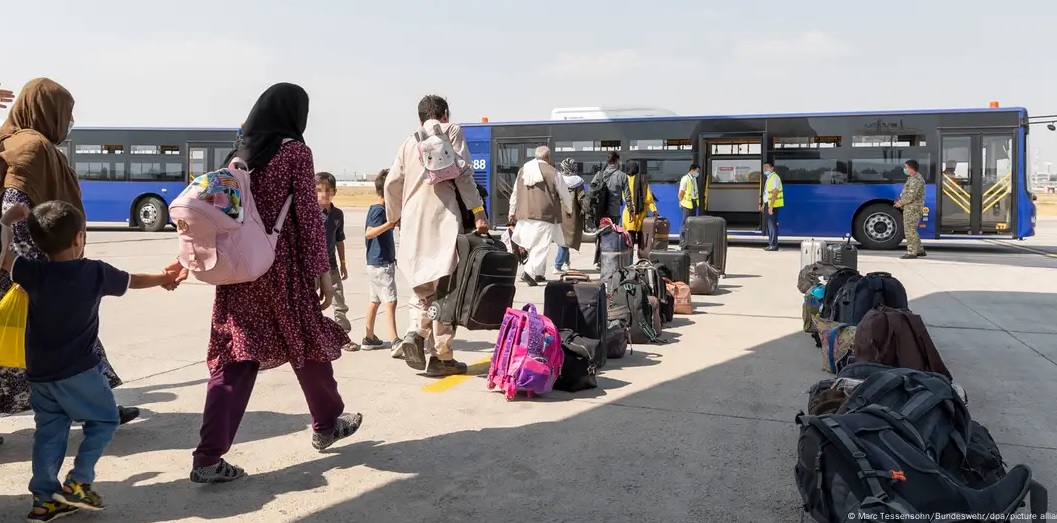

A US State Department official has confirmed to Agence France-Presse that a new decision has been made regarding Afghan nationals waiting in Qatar for resettlement in the United States.
Under this decision, the Afghans have been asked either to return to Afghanistan or be sent to the Democratic Republic of the Congo. Earlier, these Afghans had said they were living in fear in camps in Qatar following Iranian attacks on US targets.
The new US decision has been strongly challenged by Afghan refugee advocacy organizations. The head of AfghanEvac, Shawn VanDiver, said: “Among these 1,100 individuals are 400 children and interpreters who served with US forces. They are now being transferred by the United States to the Democratic Republic of the Congo, a country that itself is facing a humanitarian crisis.”
Some members of the United States Congress have also criticized the decision, saying it is unfair to Afghans who have been waiting for a long time for relocation to the US, especially given their service alongside American forces. Congressman Tim Kaine said: “We are obligated to honor our commitments. Walking away from them will make it harder to build partnerships in the future, which we need for our national security.”
On the other hand, Sweden has acknowledged that it is holding technical talks with a delegation of the Islamic Emirate regarding the deportation of Afghan nationals involved in crimes. According to information, these talks are expected to take place after a visit by an Islamic Emirate delegation to Brussels before the coming summer.
Sweden’s Migration Minister, Johan Forssell, said: “People who have been convicted of various crimes in Sweden or pose a threat to the country’s security are a priority for deportation.”
At the same time, UN Special Rapporteur Richard Bennett expressed concern over the possible deportation of some Afghans from Europe, warning that such actions could further worsen the humanitarian situation in Afghanistan.
Refugee rights advocate Abdul Razaq Adil said: “Sweden’s move is a step toward breaking the diplomatic deadlock in Europe. Likewise, despite strong political statements, the United States also needs engagement at intelligence and technical levels. There is a possibility that, instead of impractical plans like transferring Afghans to Congo, mechanisms could be developed through understanding to return Afghans to their home country.”
This comes as forced deportations of Afghans continue from Pakistan and Iran. Additionally, groups of Afghan migrants have also been returned from Turkey and Germany, mostly due to lacking legal residency documents.