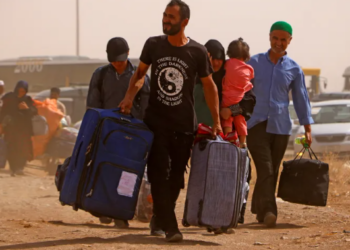
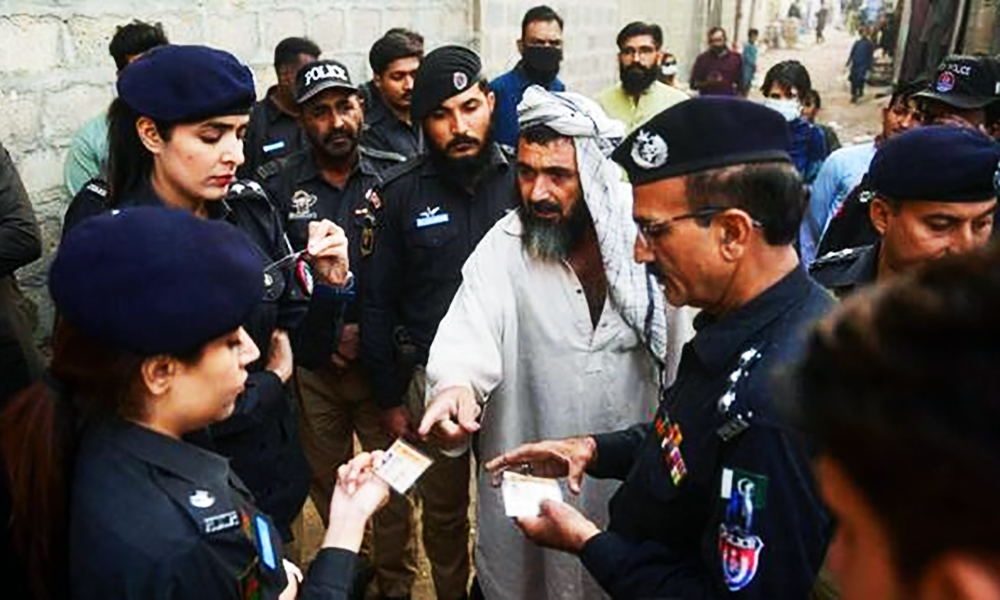

In addition to carrying out deadly attacks on civilians in Afghanistan, Pakistan’s military regime has also subjected Afghans within its own territory and areas under its control to serious problems and harassment.
Afghans living in Pakistan and Khyber Pakhtunkhwa say that the regime continues efforts to arrest, harass, and prevent Afghans from engaging in business.
Alongside Afghan refugees, international human rights organizations and advocacy groups have repeatedly condemned the treatment of Afghan refugees by the Pakistani regime and have expressed concern over their worsening situation.
Advocates say that Pakistan’s military regime harasses Afghan refugees by accusing them of involvement in political, security, and similar issues, or detains them for long periods, which they say is in complete violation of international refugee norms.
Refugee rights activist Nazar Mohammad Nazari said:
“The issue of Afghan refugees in Pakistan is not a simple matter that can be resolved through quick decisions; rather, it is the result of various factors such as political issues, security concerns, and migration challenges. Therefore, solving this issue requires a comprehensive approach. Cooperation between Afghanistan, Pakistan, and the international community is very important to end this situation.”
Some other advocates believe that Pakistan’s military regime is not committed to granting Afghan refugees their fundamental rights and instead uses the issue as a form of political pressure on Kabul.
Refugee rights activist Abdul Razzaq Adil said:
“Analysis of the situation shows that Pakistan’s current treatment of Afghan refugees has shifted from administrative management to a tool for political and security exploitation. Pakistan’s current policy not only contradicts the principles of Islam and good neighborliness but also clearly violates Articles 9 and 14 of the Universal Declaration of Human Rights. According to these articles, no one should be arbitrarily detained or deprived of access to a fair trial. A refugee is not a criminal and should not be treated as one. To resolve this crisis, it is necessary for the current government of Pakistan to distinguish between its security concerns and its humanitarian and moral obligations toward refugees.”
On the other hand, the Ministry of Refugees and Repatriation said last week that 426 Afghan refugees were released from Pakistani prisons after spending two months in detention and were returned to the country via Spin Boldak.
Meanwhile, after clashes with Pakistan’s military forces, the Torkham border crossing was reopened on the 6th of the month of Hoot (Pisces) only for returnees, but after a few hours it was closed again the same day by Pakistan, and there is still no information about when it will reopen.