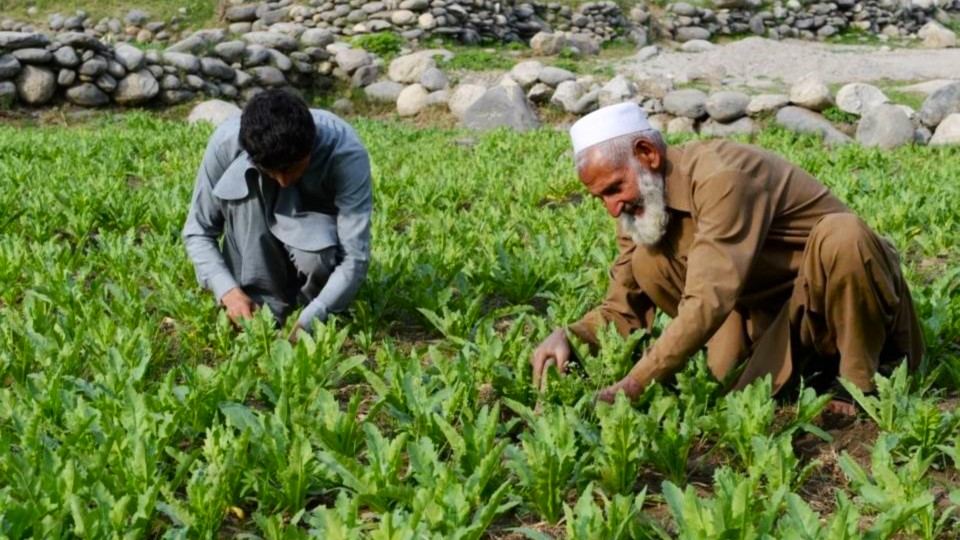

In the agricultural areas of Herat, which face drought threats every year, increased rainfall this year has brought new hope to farmers.
Farid Ahmad, one of the farmers, is pleased with this change in nature and hopeful for the upcoming harvest season.
He cultivated wheat on his two-and-a-half jeribs of land this year and says that, compared to previous years when water shortages created serious challenges for farming, timely and sufficient rainfall has improved crop growth and increased expectations for higher yields.
Farmer Farid Ahmad said: “Heavy rainfall helps crops grow well and leads to better harvests. God willing, this year we will have abundant yields, and our lives will improve.”
In Herat, many farmers rely on rain-fed agriculture, and any change in water availability directly affects their livelihoods.
This year’s consistent rainfall has benefited not only wheat but also other crops. However, the rising cost of chemical fertilizers remains a major challenge for farmers.
Farmers emphasize that they still need improved seeds, affordable fertilizers, and cold storage facilities to preserve their agricultural products.
A farmer named Omid said: “One sack of urea fertilizer costs 2,500 afghanis, and one sack of DAP fertilizer costs 7,000 afghanis. Not only me, but every farmer in this region is asking authorities to build cold storage facilities. Last year, all our onion harvest was wasted, and I even left my eggplants in the fields because there was no market for them.”
Another farmer, Gul Ahmad, said: “We ask the government to build cold storage facilities so we can store our products and avoid selling them at very low prices.”
Meanwhile, officials from the Herat Department of Agriculture, Irrigation, and Livestock say that since last winter, Herat city has received 165 millimeters of rainfall, while districts have received up to 275 millimeters—an amount expected to significantly increase agricultural production.
Bashir Ahmad Ahmadi, head of agricultural affairs at the department, said: “As you know, rain-fed wheat cultivation depends entirely on rainfall. Without rain, we cannot grow such crops. This year, the Ministry of Agriculture distributed both rain-fed and irrigated wheat seeds to farmers at the right time, and they were planted accordingly. Combined with good rainfall this year, I believe we will have strong harvests.”
According to officials, this year wheat has been cultivated on 180,000 to 200,000 hectares of land in Herat, while more than 220,000 hectares have been used for other grains and legumes.