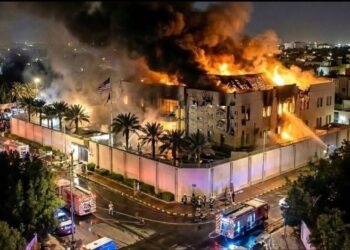
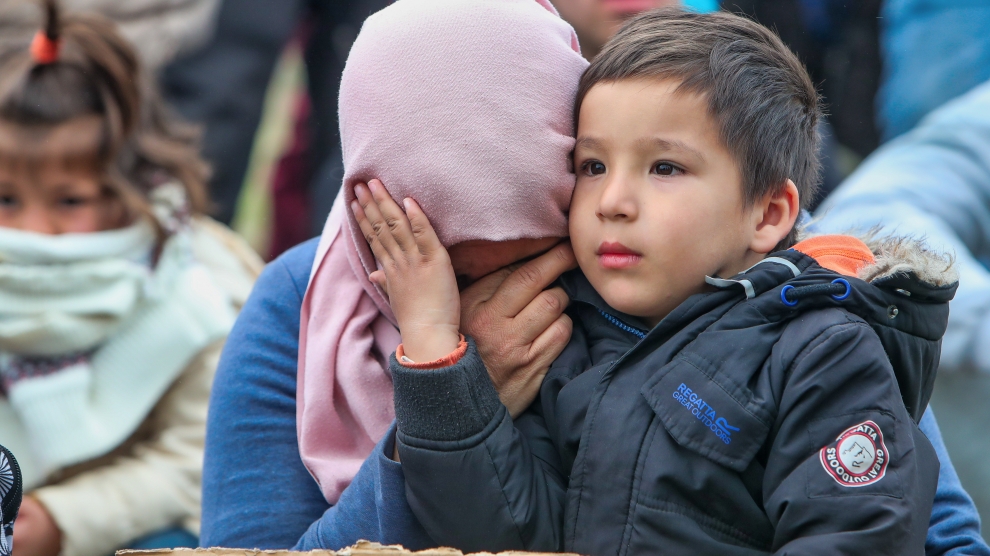

Amid ongoing concerns from human rights organizations and the United Nations regarding the current crises in the Middle East, the spokesperson for the UN Secretary-General has expressed concern during a press briefing about the rising number of displaced people in several countries.
Quoting the United Nations High Commissioner for Refugees (UNHCR), he said that due to the ongoing war in the Middle East and tensions approaching armed conflict between Afghanistan and Pakistan, more than four million people have so far been forced to leave their homes in Afghanistan, Iran, Pakistan, and Lebanon.
He added that the continued expansion of violence in the region will worsen the humanitarian crisis, increase people’s basic needs, and lead to further destruction of public infrastructure. However, he assured that the United Nations will continue providing assistance to affected communities in cooperation with its partners.
The spokesperson for the UN Secretary-General, Stéphane Dujarric, said:
“Since the war began in the Middle East, more than 4.1 million people have been displaced in Afghanistan, Iran, Lebanon, and Pakistan. The Middle East is now one of the regions in the world with the largest concentration of people in need of humanitarian assistance. In addition, around 117,000 people have fled to other countries as refugees. The recent escalation of violence has further deepened civilian suffering and caused additional damage to civilian infrastructure.”
Dujarric also added that, according to information from the government of Lebanon, more than 816,000 people have been displaced there, including about 285,000 children.
Meanwhile, human rights activists believe that the continuation of fighting between the Islamic Emirate and Pakistan’s military establishment along the Durand Line is not only damaging civilian infrastructure but is also having negative effects on the physical, emotional, and psychological well-being of children.
Human rights defender Abdul Razzaq Adil said:
“The current situation in the region is a clear sign of a humanitarian disaster. The policies of some self-interested countries have put millions of people in the region at serious risk. If the United Nations does not use its political authority and influence to resolve the conflicts, the current stability in the region will collapse.”
In addition, some analysts, referring to what they described as Pakistan’s attacks on helpless civilians and public infrastructure in Afghanistan, emphasized that the international community should increase pressure on Pakistan to reduce violence during the conflict and ensure the protection of human rights.
International relations analyst Najib Rahman Shamal said:
“The recent attacks by Pakistan’s military establishment on Afghan territory have led to civilian casualties among innocent people. Likewise, the attacks by the United States and Israel on Iran have caused civilian casualties, displacement, and a humanitarian crisis in the region, which require urgent support and serious attention.”
It is worth noting that the Ministry of Refugees and Repatriations of Afghanistan has not yet announced the exact number of internally displaced people due to the ongoing fighting between Afghan defense forces and Pakistan’s military establishment. However, the Islamic Emirate previously reported that more than 50,000 people had been displaced along the Durand Line.