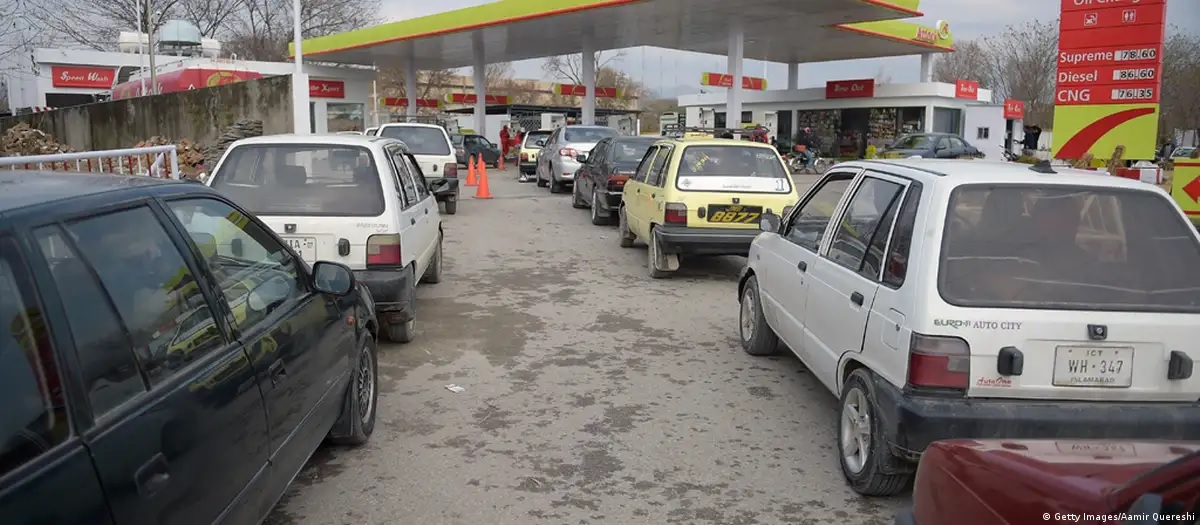

The Prime Minister of Pakistan, Shehbaz Sharif, has announced urgent steps to control the country’s ongoing economic and energy crisis. He stated that regional conflicts and direct attacks on Afghanistan have put serious pressure on Pakistan’s economy.
According to the new emergency measures:
• Government offices will operate four days a week.
• Public spending will be reduced by 20%.
• Schools will be closed for two weeks.
• 60% of government vehicles will be removed from the roads.
• Fuel allocations will be reduced by 50%.
• Half of government employees will work from home.
Officials said these measures aim to save fuel and manage limited energy resources, as rising global energy prices and regional conflicts have increased pressure on Pakistan’s economy.
The government’s announcement noted: schools will close for two weeks, 60% of government vehicles will be removed from the roads, fuel allocations will be reduced by 50%, 50% of government employees will work remotely, government offices will operate four days a week, and public spending will be cut by 20%.
Observers say Pakistan has recently faced severe economic challenges, and the day may come when the country suffers a global-scale economic collapse. Analysts note that Pakistani authorities can no longer hide their economic failures or challenges.
Economic analyst Abdul Nasir Rikhteya said: “Until Pakistan changes its foreign policy and observes international trade rules, the situation will worsen.”
Economic expert Ismail Zadran added: “This was inevitable because Pakistan has worsened relations with all neighbors, particularly through force against Afghanistan, and followed an arrogant path. Its politicians are not acting in the country’s interest.”
Political analysts also warn that Pakistan is facing not only an economic crisis but also growing political distrust internationally. They say government and military officials try to hide their domestic problems but lack real solutions.
Political analyst Moeen Gul Chamkani said: “Current conditions have further shaken Pakistan’s weak economy, which may lead to total collapse. Pakistan currently has one of Asia’s weakest economies due to heavy debt.”
Former diplomat Aziz Maarij added: “Donor countries are not providing funds because they are themselves involved in wars, and fuel shortages have grounded military aircraft. These problems naturally arise. Pakistan faces economic, political, and security challenges simultaneously.”
The Pakistani government is issuing these warnings amid long-term reliance on international loans and economic crises, which also negatively affect the country’s political and military spheres. Senior officials have been trying through various means to conceal these problems and present them as manageable.