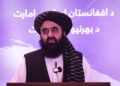
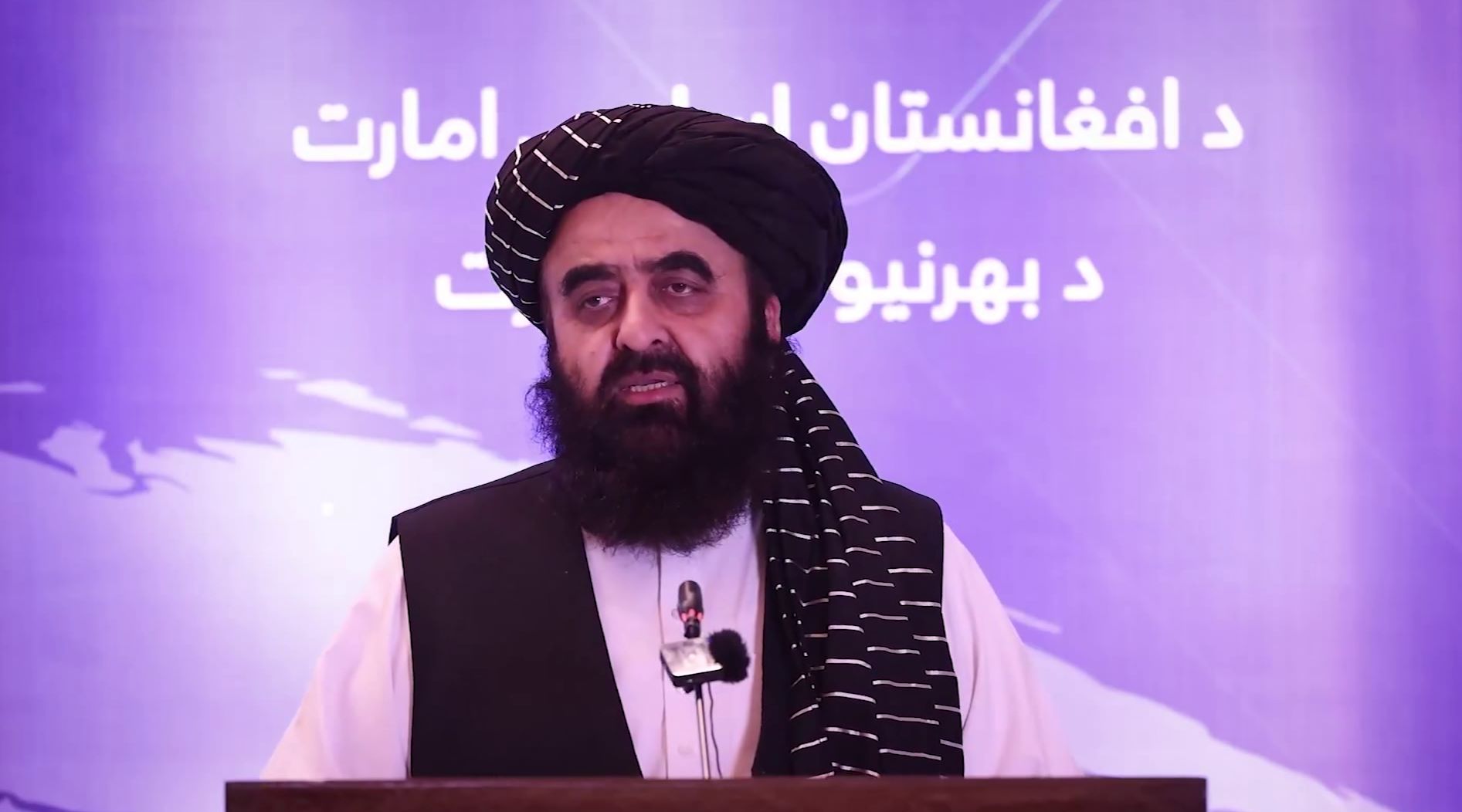

Amir Khan Muttaqi, the foreign minister of Afghanistan’s Islamic Emirate, said that Pakistani generals have put the security of the entire region at risk.
Speaking at an iftar gathering in Kabul with foreign diplomats and representatives of international organizations, Muttaqi described the calculations of Pakistan’s military regime regarding Afghanistan as misguided, saying Islamabad must reconsider its policies.
Muttaqi said Afghans have been facing aggression from Pakistan’s military regime for nearly two weeks. He added that Pakistani generals are attempting to resolve their internal problems through military actions rather than political solutions, a policy he said has created serious security threats across the region.
He stated:
“Instead of trying to resolve their internal problems, Pakistani generals have endangered the security of the entire region. The Pakistani military establishment speaks of a ‘hard state’ and has chosen a military path rather than political solutions to address its political problems. The ruling military regime is in conflict with its own politicians, religious scholars, and people, and instead of seeking understanding, it tries to solve problems through confrontation and pressure. The past decades have shown that pressure and the baseless use of force strengthen resistance rather than solving problems.”
The Ministry of Foreign Affairs of Afghanistan said Pakistan launched attacks on Afghanistan while representatives of the Islamic Emirate were in talks with a delegation from Saudi Arabia that had arrived in Kabul to mediate.
According to Muttaqi, three days before Pakistan’s attack, the Islamic Emirate had released three Pakistani soldiers captured in previous clashes as a goodwill gesture during the holy month of Ramadan and in respect of Saudi mediation efforts.
Muttaqi said:
“On February 22 this year, Pakistan’s army attacked us while our negotiating team was engaged in discussions with the Saudi mediation team on a bilateral agreement. Five days earlier, on February 17, we had handed over three Pakistani prisoners of war to the Saudi delegation as a sign of goodwill and respect for Ramadan and mediation efforts. However, on February 22 Pakistani forces bombed our eastern and southeastern provinces using jet and drone aircraft.”
He said the strikes targeted seven civilian sites, including a religious school, and resulted in the deaths of 15 people, including women and children.
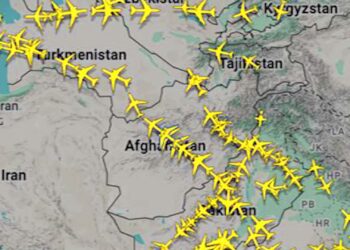
The conflict between Afghanistan and Pakistan intensified after the Ministry of National Defense of Afghanistan launched retaliatory operations along the Durand Line following what it described as violations of Afghan airspace and the killing of civilians.
The Foreign Ministry added that Pakistan has not only violated Afghanistan’s airspace and killed civilians in airstrikes but has also mistreated Afghan refugees in its territory while attempting to damage Afghanistan’s image internationally.
Muttaqi also referred to the ongoing war involving Iran, United States, and Israel, warning that it has further inflamed tensions across the region. He said extending the conflict across the region is not in the interest of any country and called for the fighting to stop as soon as possible.
He added that attacks by the United States and Israel on Iran have created serious threats to regional and global security and expressed concern about the potential spread of the conflict to countries such as Saudi Arabia, Qatar, United Arab Emirates, Oman, Turkey, Bahrain, and Azerbaijan.
Muttaqi stressed that the territorial integrity of countries must not be violated, saying the Islamic Emirate does not support any violation of a country’s sovereignty.
On February 28, the United States and Israel carried out large-scale airstrikes on Iran, killing Iran’s supreme leader along with several senior officials and members of his family. In response, Iran launched missile attacks on several Israeli cities and targeted U.S. military bases in Gulf countries, claiming to have inflicted casualties on American forces.
Although the United States and Israel reportedly expected the conflict to end quickly after targeting Iran’s leadership, it now appears unlikely that the war will end soon.