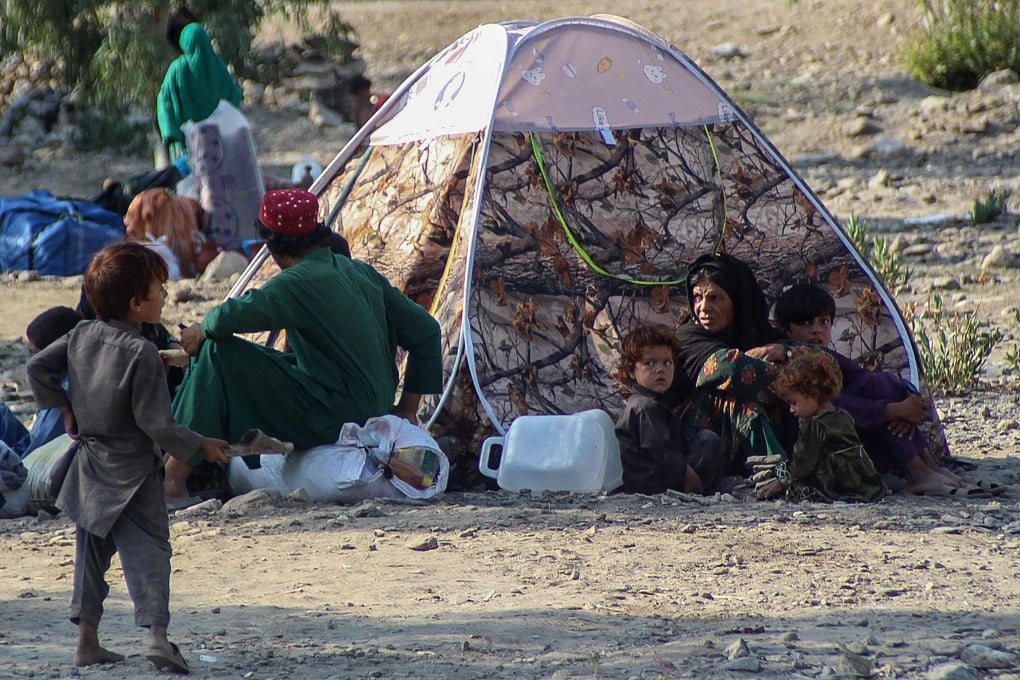

The United Nations says that ongoing clashes between Afghanistan and Pakistan along the Durand Line have displaced thousands of families on both sides.
In its latest report, the UN High Commissioner for Refugees (UNHCR) released figures on the displaced and expressed concern over the rising numbers. UNHCR stated that conflicts between Afghanistan and Pakistan, as well as wars involving Iran, United States, and Israel in the Middle East, have displaced a total of 330,000 people.
The report noted:
“The expansion of conflicts in the Middle East has led to significant human displacement. In addition, clashes along the Afghanistan–Pakistan border have forced thousands of families to flee their homes. Overall, these conflicts have displaced 330,000 people, most of whom remain in the affected countries.”
Specifically, UNHCR estimated that around 115,000 people along the Durand Line in Afghanistan and approximately 3,000 on the Pakistani side have been forced to leave their homes.
The report urged all parties to prioritize dialogue instead of continuing hostilities and to ensure the protection and rights of civilians during the fighting.
According to UNHCR:
“The ongoing clashes along the Afghanistan–Pakistan border have created a complex situation in both countries, with reports indicating that numerous families have been displaced. In Afghanistan, approximately 115,000 people and around 3,000 across the border have been displaced.”
The Ministry of Refugees and Repatriation has not commented on the accuracy or denial of these figures. Previously, the Ministry of Defense stated that while Afghan forces target only military objectives across the border, the opposing side deliberately targets civilian areas and homes.
UNHCR had also expressed concern on March 3 about the humanitarian impact of Afghanistan–Pakistan clashes, highlighting the provinces of Nangarhar and Kunar as having a higher number of displaced families.
Abdul Raqib Adil, a refugee rights advocate, said:
“To prevent a major humanitarian crisis, conflicts must be resolved through dialogue, and refugee rights should be protected in coordination with international organizations. UNHCR, which has primary responsibility for protecting refugee rights, should also urge Pakistan to stop forcibly deporting Afghan refugees.”
The UN’s report comes amid ongoing internal displacement in Afghanistan caused not only by conflict but also by water shortages, natural disasters, and other factors reported by the organization in various provinces last year.