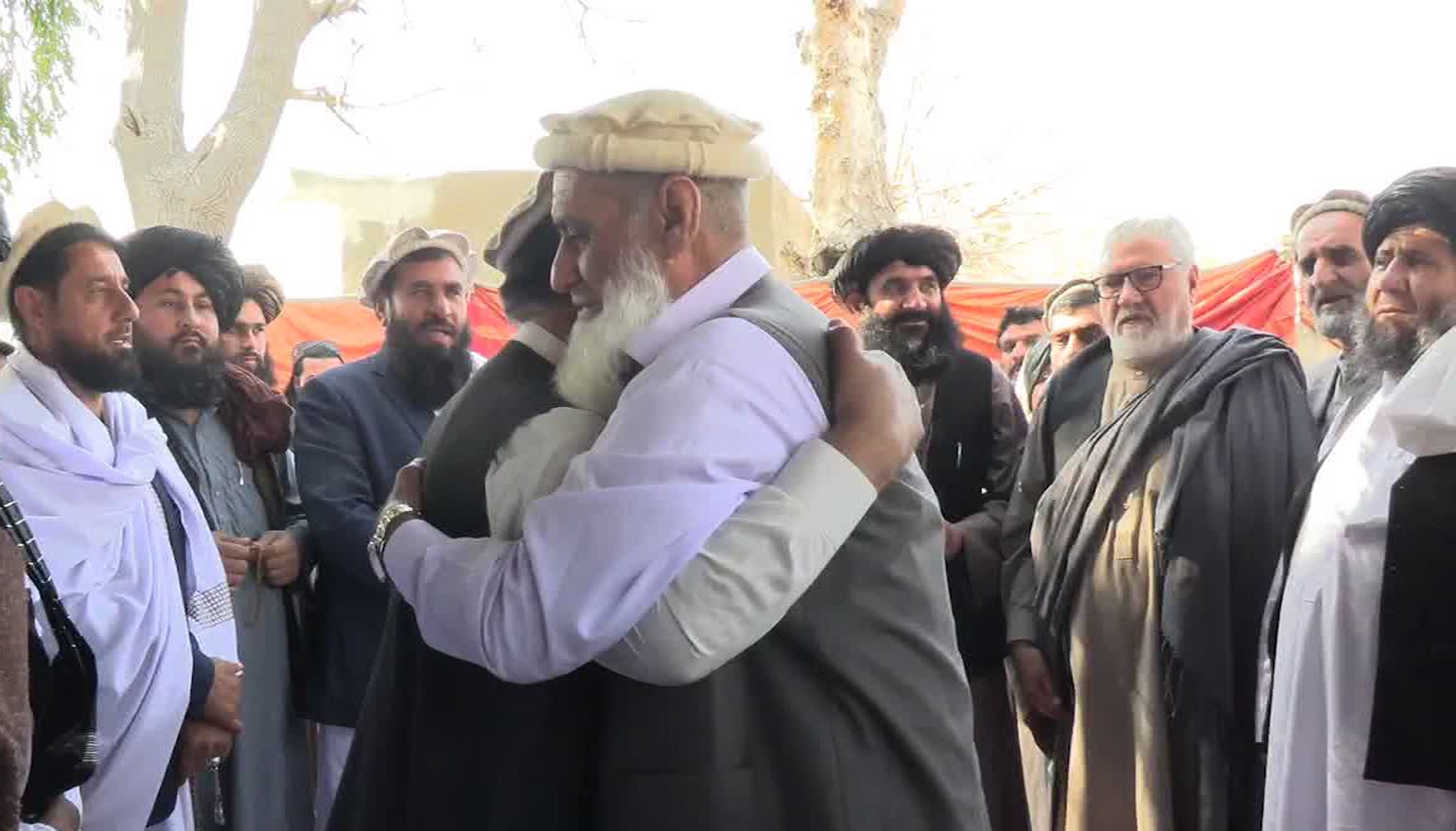

In Laghman province, the longstanding feud between the families of Gulbahar and Dr. Malik, which had been fueled by hatred and resentment for years, was brought to an end through the mediation of well-wishers and community elders.
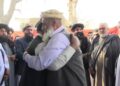
This enmity, alongside other influential figures, tribal leaders, and scholars, was transformed into friendship through the mediation of Haji Fazl al-Karim Fazl, the tribal leader of the Abdul Rahimzai, and both sides forgave each other.
During the jirga convened on this matter, a member of the victim’s family, Dr. Abdul Malik, expressed gratitude to tribal leader Fazl al-Karim Fazl for his tireless efforts in reconciling the families and extinguishing the “fire” between them.
A member of the victim’s family, Abdul Malik, said: “Our tribal leader Haji Fazl al-Karim Fazl, who is the head of the Abdul Rahimzai tribe throughout Afghanistan, carried out continuous efforts for nearly four years to bring peace and reconciliation between us. May God bless his life and happiness. He has not only done this here but has also held peace meetings and jirgas in Nangarhar, Kabul, Logar, and other areas. I call him a peace specialist.”
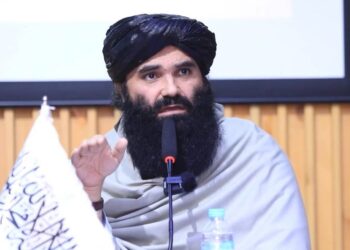
At the same time, Haji Fazl al-Karim Fazl, tribal leader of the Abdul Rahimzai, thanked both families for their patience, tolerance, and goodwill, and emphasized that resolving conflicts is only possible through dialogue, understanding, and forbearance.
He also stressed the importance of education in society, stating that if a community wants to protect itself from such misfortunes, the only way is through knowledge and learning.
Fazl highlighted some of the honored women of the past, noting that previous generations carried messages of wisdom, courage, and awareness, and that the current generation should also illuminate its future through education and literacy.
Haji Fazl al-Karim Fazl said: “We have had many respected and heroic women, and they raised sons like Ahmad Shah Baba and Mirwais Khan Nika. If there is education in a household, it can raise good children; when good children are raised, they bring reform to the community, and such problems will not arise again. Most problems in our society come from ignorance.”
He added that this jirga once again demonstrated that traditional jirgas can still replace hatred with love and conflict with peace.
Meanwhile, Laghman provincial officials praised the efforts of tribal elders and their tireless mediation, noting that the unity of tribal leaders and communities is what allows conflicts to transform into peace and animosity into love and brotherhood.
Laghman Governor Bakhtiar Moaz said: “This process has now begun across all of Laghman; in every district and village, our elders, religious scholars, and influential figures are actively engaged in resolving misfortunes and enmities. They have been tasked with turning these feuds into friendships.”
Many tribal elders and youth participated in the jirga, including the district governor of Qarghio, as well as officials responsible for promoting virtue and preventing vice, all of whom spoke in turn during the meeting.
The jirga is a traditional Afghan institution used to resolve disputes, achieve reconciliation, and promote social understanding.
For years, tribal leaders, religious scholars, and influential figures have used jirgas to resolve issues between families, villages, and even tribes, striving to transform enmity into unity and brotherhood.