In 2015, the United States and Western countries reached an agreement with Tehran to limit Iran’s nuclear program, but in 2018 the U.S. withdrew from the agreement.
This decision completely changed Washington’s stance on Iran’s nuclear facilities, and then-President Donald Trump increased economic pressures on Iran.
Prior to this, five rounds of negotiations had taken place between Washington and Tehran on limiting Iran’s nuclear program. The most recent, sixth round, was held on February 6 under the hosting of Oman.
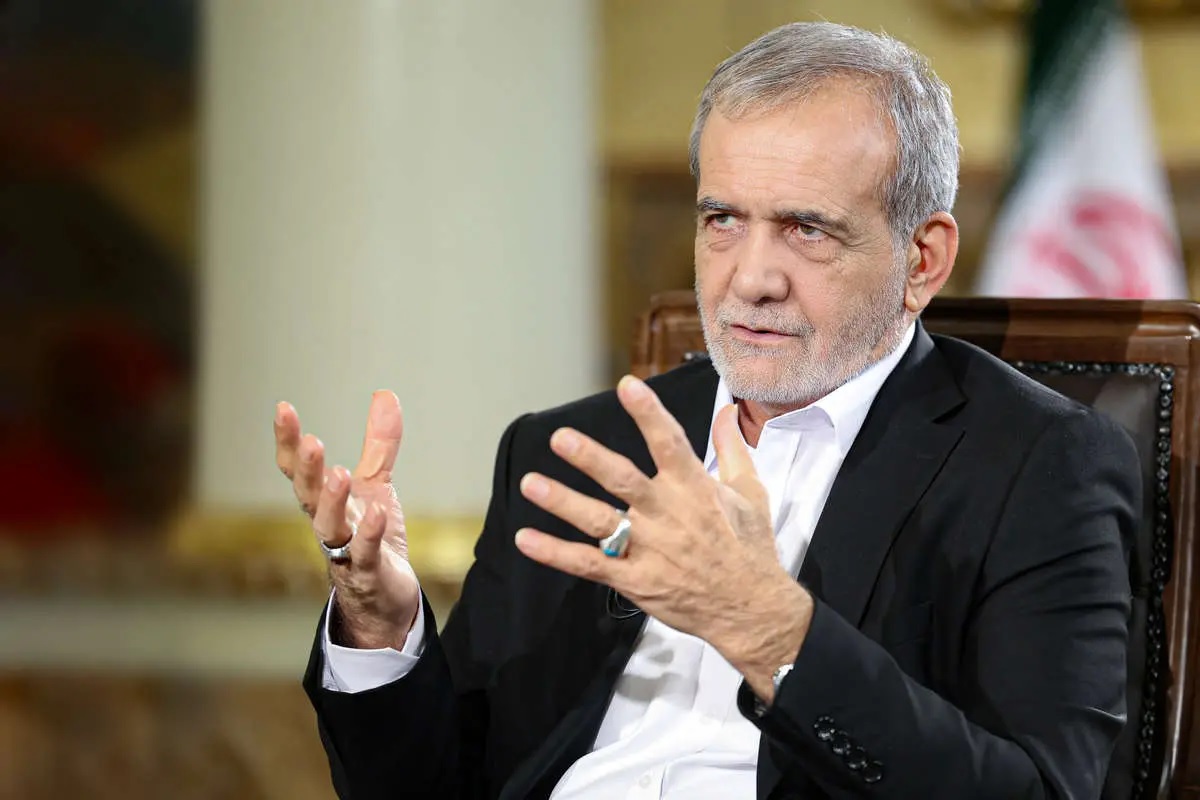
Referring to the recent talks, Iran’s president called this round a starting point for progress in negotiations and emphasized prioritizing international norms regarding Iran’s nuclear facilities.
Iranian President Masoud Pezeshkian said:
“The talks between Iran and the U.S., held through the efforts of friendly countries in the region, are a step forward. Resolving problems through dialogue is our approach. Our stance on nuclear facilities is based on the logic outlined in international law regarding their limitations. The Iranian nation respects respect, but does not accept the language of force.”
According to Iranian media reports, four advocates of political reforms were recently arrested in the country, with the government citing disruption of political and social order as the reason.
The reports further stated that these individuals, allegedly supported by the U.S. and Israel, were attempting to create instability and violence in Iran.
Fars News Agency reported:
“These individuals harmed national unity, opposed the constitution, aligned with enemy propaganda, engaged in political activity for disorder, and created mechanisms for chaos.”
After the talks in Oman, U.S. officials reportedly observed an American naval vessel in the Gulf of Oman that had been sent to the region for potential strikes against Iran. At the same time, Iran’s Foreign Minister, Abbas Araghchi, also observed naval vessels belonging to Iranian forces.
Meanwhile, The Jerusalem Post reported, citing sources, that Israeli officials warned U.S. President Donald Trump that without a firm U.S. stance, Israel might act independently and decide to strike Iran.
The report stated that such a decision would be implemented if Iran refuses the proposed restrictions on ballistic missiles. The Jerusalem Post added:
“We have told the U.S. that we will strike Iran independently if the country crosses the defined limits regarding ballistic missiles.”
Iranian Foreign Minister Abbas Araghchi also stated that Iran does not agree with U.S. demands to completely eliminate its nuclear program, and it will not accept any conditions regarding missiles from Washington or any other party, nor are such conditions included in the negotiation agenda. However, the U.S., in addition to these demands, has requested Tehran’s positive response on a range of other issues.