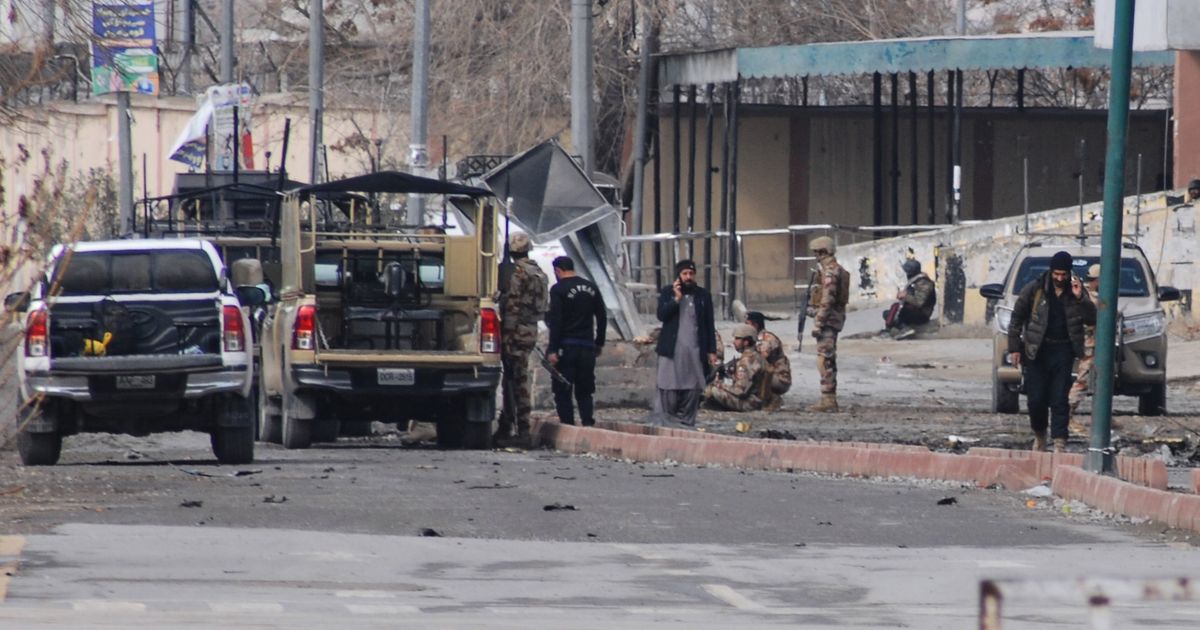

Several political parties in Pakistan have criticized the country’s security institutions following a deterioration in the security situation, particularly after an explosion during Friday prayers at a mosque in the capital, Islamabad.
After the blast, political parties strongly condemned Pakistan’s security and intelligence agencies. The leader of Jamiat Ulema-e-Islam (JUI) stated that Pakistan’s intelligence and security institutions have failed to ensure public safety and are instead interfering in the country’s political affairs.
JUI chief Maulana Fazlur Rehman said: “Pakistan’s security and intelligence agencies have failed to maintain public security. Instead of protecting the people, these institutions are busy meddling in political affairs and merely rely on condemnations after incidents occur.”
Military affairs analyst Hikmatullah Hikmat commented on the current situation in Pakistan, saying: “Yesterday’s operation in Islamabad was one of the ISI’s complex, multi-objective operations aimed at blaming opponents, diverting public attention, and creating ethnic divisions. I can say with full confidence that yesterday’s operation was orchestrated by the ISI. Fortunately, the world is no longer one that blindly believes Pakistan’s intelligence agencies and listens to their narratives after such terrorist attacks.”
Some nationalist politicians have also said that terrorist groups posing security threats to the region were created by Pakistan. They argue that instead of controlling the deteriorating situation caused by these groups, the Pakistani army targets its political opponents and nationalist, politically conscious circles in Khyber Pakhtunkhwa.
Nationalist politician Afrasiab Khattak said: “Dangerous groups and terrorist organizations that pose threats to the world and the region were created by Pakistan, yet instead of fighting armed groups, the Pakistani state and army have imposed repression on political opponents.”
In response to the recent Islamabad blast, the leader of the Pashtun Tahafuz Movement (PTM) said that the only solution to the current situation is for the people, in his words, to stand up against Pakistan’s colonial system.
Manzoor Ahmad Pashteen said that Pakistan can only stop peaceful protests in Islamabad, not attacks. He added that the current situation is the result of their policies, with ordinary people being the main victims.
PTM leader Manzoor Ahmad Pashteen stated: “Pakistan’s military government can prevent peaceful protests in Islamabad, but it cannot prevent an attack inside a mosque. In Pakistan’s colonial war, it is the poor people who pay the price in pain, tears, and blood, while dollars, factories, and islands go to the country’s military generals. The only solution to colonialism in Pakistan is for the people to openly stand against the army.”
Analysts say the ongoing security situation in Pakistan is the result of flawed strategies and policies adopted by the country’s military regime over decades. They warn that if Pakistan does not change its approach, the ongoing conflict in the country and in Khyber Pakhtunkhwa will further intensify.
Political analyst Shahzada Masood said: “Pakistan’s current policy—unfortunately aimed at hiding its own security failures by shifting blame onto one group or another—needs fundamental change. Pakistan should adopt a civilized approach in its relations with all neighboring countries. If it does not change its policies, I believe this will be neither the first explosion nor the last.”
Following the deadly explosion at a mosque in Islamabad, which caused heavy casualties, the US Embassy in Pakistan issued a warning to its citizens to avoid crowded places and refrain from participating in public gatherings.