
Amid ongoing intense fighting, with both sides continuing attacks against each other, the President of the United States has claimed that the ruling regime in Iran has collapsed.
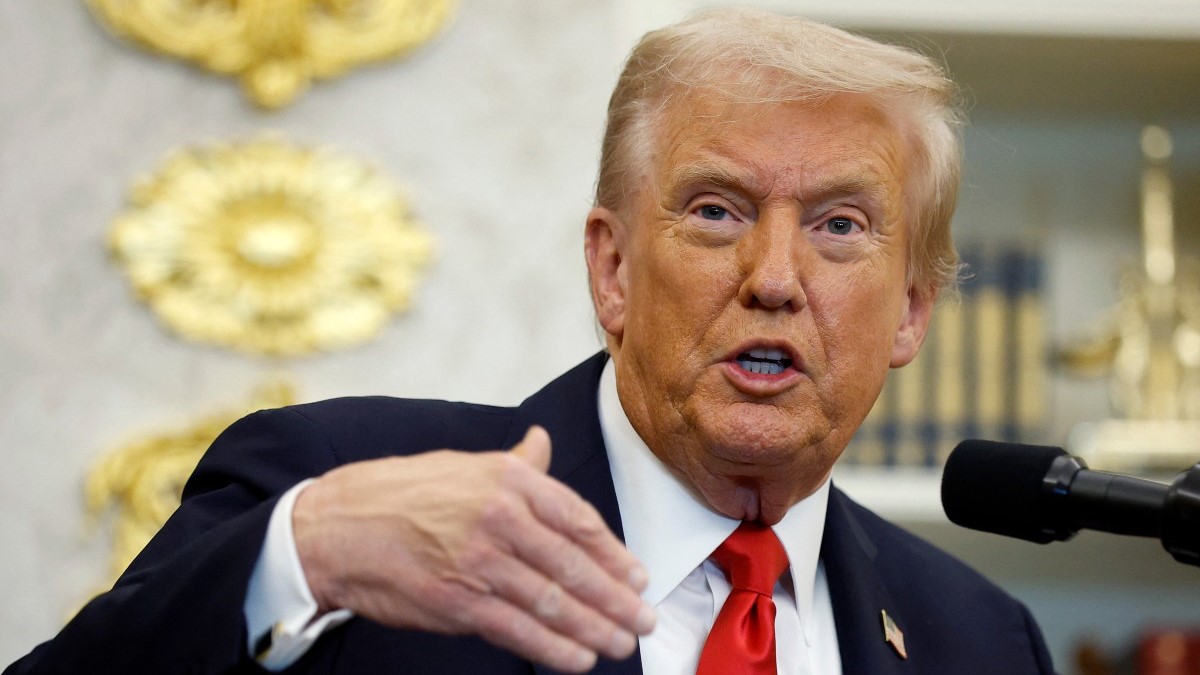
Donald Trump, contradicting his previous statements in which he said he was not seeking regime change in Iran, now told reporters that the elimination of the regime is important. He suggested that the removal of Iran’s religious leadership and the continuation of war, alongside the possibility of negotiations, effectively amount to the end of the regime.
Trump said he believes an agreement has been reached with the opposing side but did not rule out the possibility that negotiations may not take place at all.
U.S. President Donald Trump stated:
“I think and I believe we have reached a deal with them; however, it is also possible that it may not happen. The regime in Iran has already changed, because a large part of it has collapsed and been eliminated—they are all dead. The second layer of the regime is also nearly gone, but with the third layer, we are in talks with individuals we have never spoken to before.”
In an interview with the Financial Times, he added that he could take control of all of Iran’s oil reserves and even seize Khark Island.
Trump’s remarks have increased the likelihood of reports suggesting that the United States has been preparing for a ground offensive against Iran in recent days.
Meanwhile, around 2,000 U.S. troops have already been deployed to the Middle East by order of the Pentagon.
Iran has accused the United States of pursuing a dual policy, stating that while Washington speaks of negotiations and dialogue, it is simultaneously preparing for a ground attack.
In response, Iran’s Parliament Speaker Mohammad Bagher Ghalibaf warned that Iranian forces are ready and waiting for U.S. troops, promising an unprecedented and crushing response against them and their regional allies.
Ghalibaf said:
“While the enemy openly speaks of negotiations and dialogue, behind the scenes it is secretly planning a ground attack.”
Separately, a four-party meeting of the foreign ministers of Turkey, Saudi Arabia, and Egypt, held in Pakistan to stop the ongoing war and initiate negotiations, concluded on Sunday night. The participants emphasized the need for a permanent ceasefire, acknowledged the consequences of the war, and expressed support for initiating dialogue among the involved parties.
Pakistan’s Ministry of Foreign Affairs described the meeting as productive and stressed the importance of controlling the situation.
The ministry stated:
“The foreign ministers unanimously emphasized the need to control the situation, prevent further military escalation, and create a conducive environment for dialogue and negotiations among the involved parties.”
This comes as the United States and Israel recently carried out joint strikes on Iran’s power infrastructure, causing electricity outages in the capital Tehran and several other areas.
In response, Iran launched missile attacks targeting U.S. positions in Kuwait and Saudi Arabia.
Since the start of the conflict on February 28, official figures indicate that casualties on the Iranian side have reached nearly 30,000.
The United States has confirmed the deaths of 13 soldiers and injuries to around 200 others, while Israel has also suffered significant casualties.