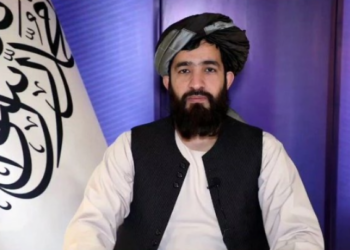
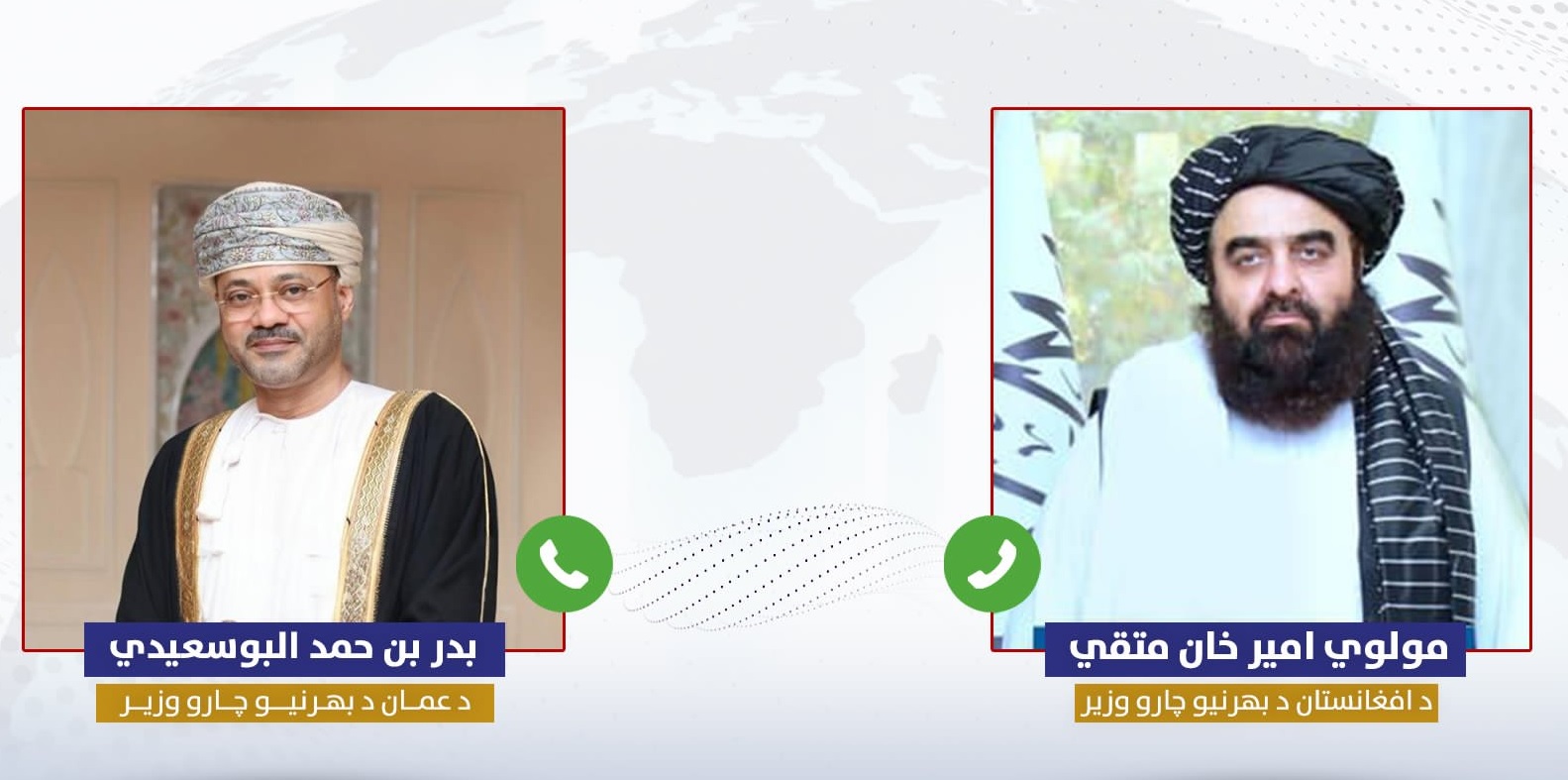

The Afghanistan Ministry of Foreign Affairs stated that talks between Mullah Amir Khan Muttaqi and Oman’s Sultanate counterpart Badr bin Hamad Al Busaidi focused not only on expanding bilateral relations but also largely on the negative consequences of U.S. and Israeli attacks on Iran.
The Ministry’s press release said both sides expressed concern over the spread of war in the Middle East.
During the talks, Mullah Amir Khan Muttaqi provided details on Pakistan’s military aggression and the Islamic Emirate’s reciprocal defensive measures, clarifying Afghanistan’s official stance on these actions.
Deputy spokesperson Zia Ahmad Takal said: “Both sides considered the recent developments in the Middle East worrying. They condemned the U.S. and Israeli aggression on Iran and the expansion of the war to other regional countries. Both parties also exchanged views on the latest situation between Afghanistan and Pakistan, during which Afghanistan’s Foreign Minister outlined the government’s position regarding Pakistan’s attacks and the Islamic Emirate’s defensive responses.”
Takal added that both parties emphasized that ongoing regional conflicts must be resolved through dialogue.
Analysts note that such diplomatic exchanges are useful in mitigating the negative effects of the spreading conflict in the region. Political analyst Turiyali Zazai said: “The ongoing crises in the world are caused by global superpowers. Pakistan is also a project of these powers and is used to destabilize regional countries including Afghanistan. Currently, the world hopes for an end to the wars everywhere.”
These talks with Oman’s Foreign Minister follow similar discussions with ministers from China, Russia, Qatar, Iran, Uzbekistan, and several other countries regarding bilateral relations, regional conflicts, and Pakistan’s military attacks.
Analysts emphasize that continued regional violence benefits no one, and existing problems should be resolved through dialogue. International relations expert Najib-ur-Rahman Shomal said: “Peace in the region and the world can only be ensured through diplomatic channels and peaceful negotiations. Implementing United Nations Security Council resolutions is also one of the best methods. I hope all parties involved in the conflict recognize their mistakes and prevent wars in every region.”
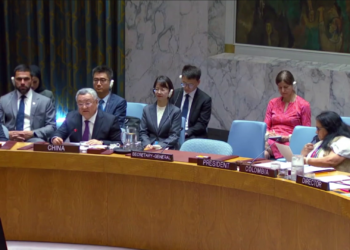
Meanwhile, the China Foreign Minister expressed concern over the ongoing conflict between Kabul and Islamabad and stressed the political and diplomatic resolution of disputes between the two countries.
Analysts note that resolving the issues depends on Pakistan’s intentions. So far, Pakistan’s actions do not indicate a real desire for peace: while a three-member delegation is in Kabul, heavy shelling of civilians continues along the Durand Line.
Considering China’s influence in Islamabad, analysts suggest that if China truly wants, it could push Pakistan toward genuine peace.