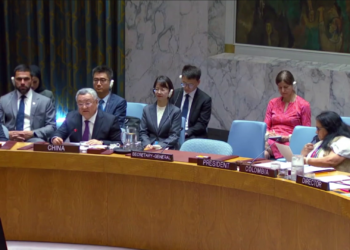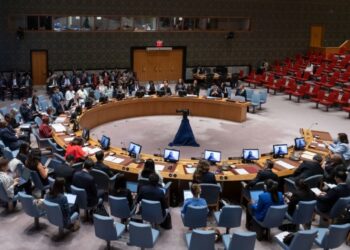
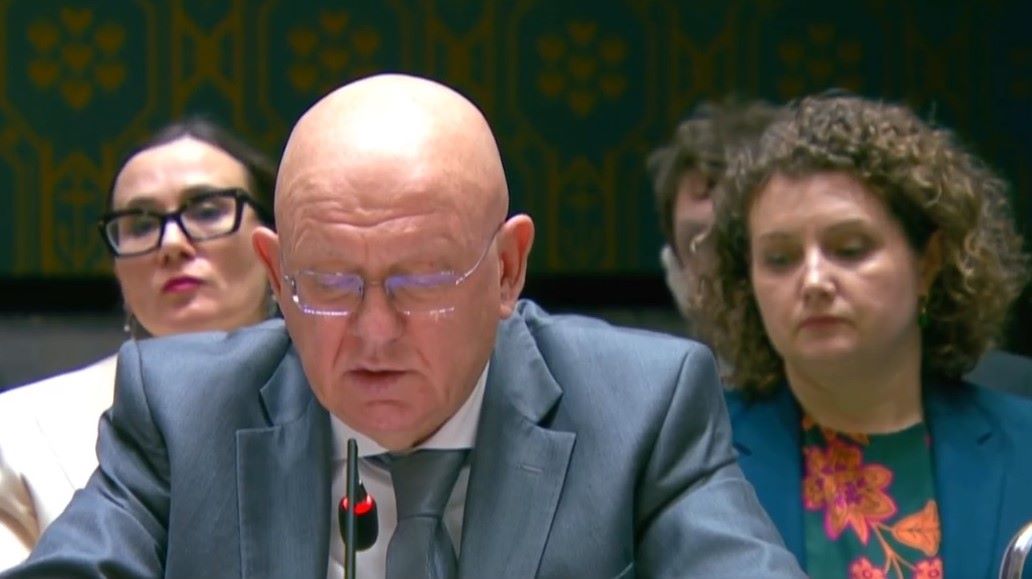

At a meeting of the United Nations Security Council, representatives of several countries discussed various issues related to Afghanistan. Some criticized the current situation, while others praised the government’s efforts in combating terrorism and narcotics.
Vasily Nebenzya, the permanent representative of Russia to the UN, said that although the Islamic Emirate has taken serious steps against terrorism, external support and financing for terrorist groups could destabilize Afghanistan.
Nebenzya stated:
“Although the Islamic Emirate is fighting terrorism, the presence of the Khorasan branch of ISIS-K remains concerning. Foreign terrorists and external funding continue to destabilize Afghanistan.”
The Islamic Emirate has not recently commented on these remarks but previously stated that ISIS no longer has a presence in Afghanistan.
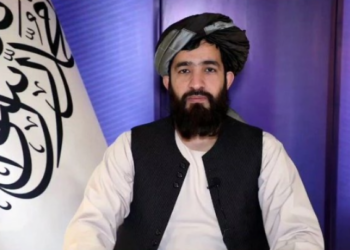
Spokesperson of the Islamic Emirate, Zabihullah Mujahid, said:
“The remaining members of this extremist group fled to their original areas in Khyber Pakhtunkhwa and Balochistan, where they established new hideouts and centers. Intelligence shows the group is reorganizing there and planning attacks in Afghanistan and elsewhere.”
Meanwhile, some countries’ representatives and the acting head of the United Nations Assistance Mission in Afghanistan (UNAMA) criticized the continued restrictions on girls’ education in Afghanistan.
Georgette Gagnon, UNAMA’s acting head, said the ban on girls’ education reduces Afghanistan’s human capital and negatively affects all Afghans, calling the situation unacceptable.
She stated:
“Decisions by the Islamic Emirate and the resulting isolation of Afghanistan by the international community have weakened the country’s efforts toward economic self-reliance. The ban on girls’ education will weaken Afghanistan’s human capital in the long term and negatively affect all Afghans. This situation is no longer acceptable.”
Representatives of the United States and United Kingdom also expressed concern, saying restrictions on girls’ education have distanced Afghanistan from the international community and limited global aid to Afghans.
U.S. representative Mike Waltz said:
“Restrictions on Afghan women and girls’ education and limitations on female UN workers are concerning. These measures harm human rights and the lives of Afghan women and have restricted poor people’s access to international assistance.”
The UK representative Hannah Bruns‑Smith condemned the restrictions and called for them to be lifted immediately.
Some analysts argue that the Security Council has lost its effectiveness in maintaining global order and is influenced by major powers. University professor Faiz Mohammad Zaland said the council is increasingly trapped in the interests of major powers and that recent criticisms regarding Afghanistan are neither practical nor scientific.
He added that Afghanistan’s current challenges stem from social crises, economic instability, and the forced deportation of Afghan refugees from Pakistan and Iran, suggesting the Security Council should focus on helping resolve these problems.
The Islamic Emirate has not issued a new statement on the matter but has previously described the issue of girls’ education as an internal matter, urging other countries not to interfere in Afghanistan’s domestic affairs.