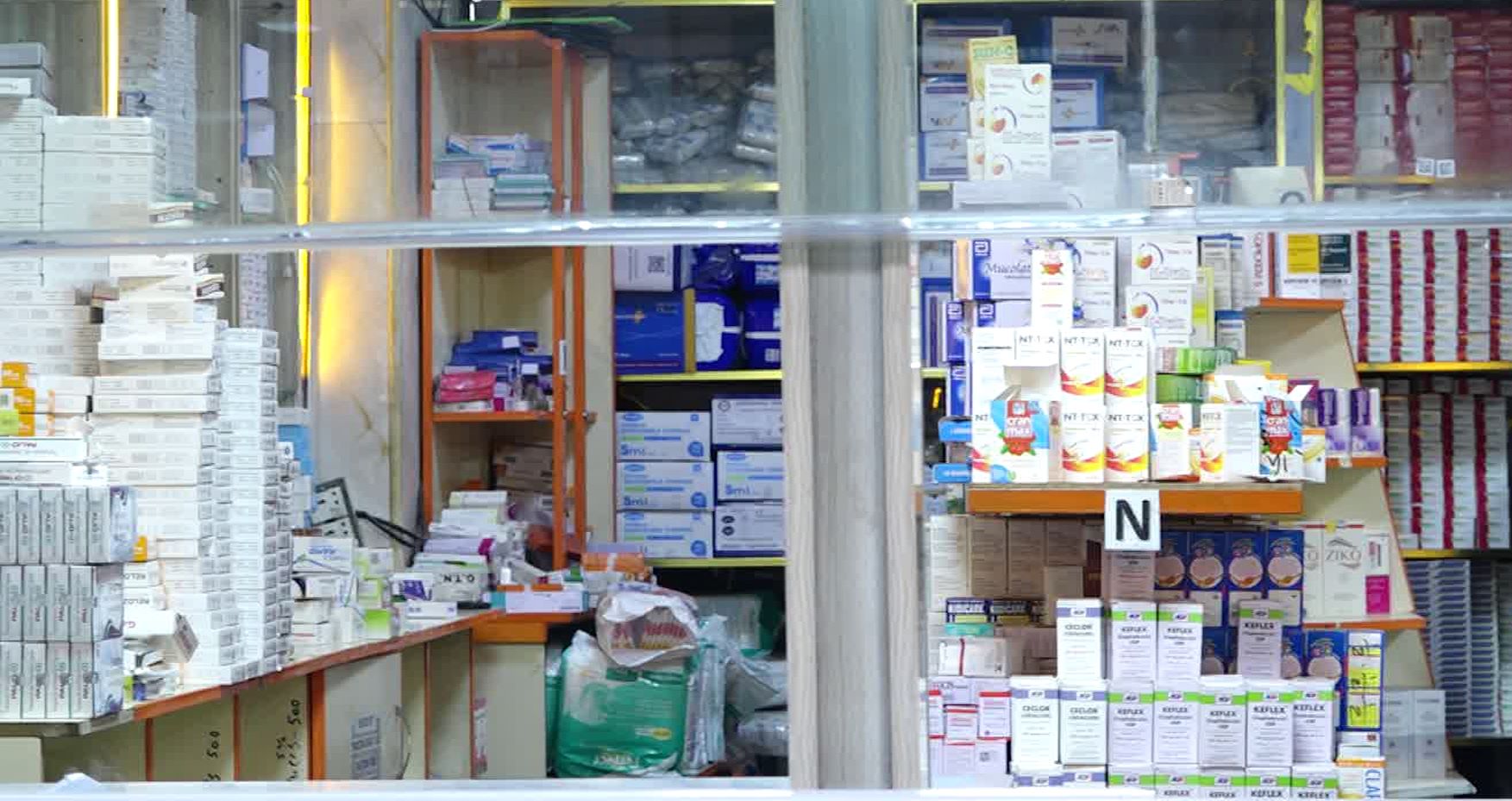
The three-month deadline given by the government to Afghan traders to import medicines from Pakistan has expired.
At the same time, several doctors told Shamshad News that they welcome the decision to impose a complete ban on the import of medicines from Pakistan. According to them, the quality of Pakistani medicines is very low, which has reduced public trust in Afghan doctors.
They also say that in many areas, domestically produced medicines have much higher quality than Pakistani ones.
Dr. Zia ur Rahman Mangal said:
“Currently, reliance is mostly on medicines from India and Bangladesh, and alongside these, our own domestically produced medicines are being used. For now, domestic medicines are a good option for us.”
Doctors further noted that the raw materials for domestically produced medicines are imported from India, Bangladesh, Iran, China, and Turkey, and for this reason, after the ban on Pakistani medicine imports, no negative impact has been felt in the markets.
Dr. Mohammad Rahman said:
“The ban on Pakistani medicine imports has not had any particular impact, because those medicines are now available in the country with good quality and at lower prices.”
On the other hand, many residents of Kabul are concerned about the low quality of Pakistani medicines and have welcomed the Afghan government’s decision to ban their import.
A resident of Kabul, Mohibullah, said:
“Medicines imported from Pakistan were of poor quality. We welcome the decision of the Islamic Emirate and request that, instead, high-quality medicines be imported from other countries.”
Another Kabul resident, Mohammad Yahya Hanifi, said:
“We warmly welcome the complete ban on the import of Pakistani medicines, because Pakistani medicines were of low quality.”
On November 12 last year, the Deputy Prime Minister for Economic Affairs, Mullah Abdul Ghani Baradar, gave traders three months to settle their accounts in Pakistan and stop importing medicines from that country.
Mullah Baradar had described medicines imported from Pakistan as low quality and said that hundreds of millions of dollars were transferred to Pakistan every year due to this trade.
With the expiration of the deadline, the spokesperson of the Ministry of Finance warned that after the 21st of Dalwa (Aquarius), Pakistani medicines would no longer be cleared at the country’s customs and no one would be allowed to import them.
Abdul Qayum Nasir added that, like other goods, the smuggling of medicines would also be prevented, and anyone involved would be handed over to the law.
Ministry of Finance spokesperson Abdul Qayum Nasir said:
“After the 21st of this month, Pakistani medicines will not be allowed to be imported through any of the country’s customs offices. Likewise, the entry of all smuggled goods, including medicines, through smuggling routes will be prevented. All smuggled goods seized outside customs areas, and those responsible for them, will be handed over to the law.”
Meanwhile, the Minister of Public Health said that previously 60 to 70 percent of medicines and medical supplies were imported from Pakistan, most of which were of low quality.
In an exclusive interview with Shamshad, Minister of Public Health Noor Jalal Jalali added that the government is seeking alternative options to Pakistani medicines, and in this process, medicines from India, Bangladesh, Russia, Turkey, and several other countries are being imported.
Minister Jalali said:
“Our Food and Drug Directorate is in contact with many countries on this issue. Currently, medicines are being imported into Afghanistan from India, Bangladesh, Turkey, Iran, Uzbekistan, and other countries. We are trying to import medicines with good quality and reasonable prices. We have also traveled to Russia for this purpose and held talks with major pharmaceutical companies there.”
According to analysts, the import of Pakistani medicines into Afghanistan was banned at a time when these medicines were meeting about 70 percent of the market’s needs in the country.